
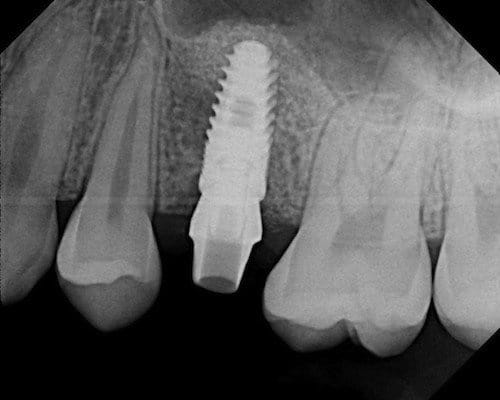
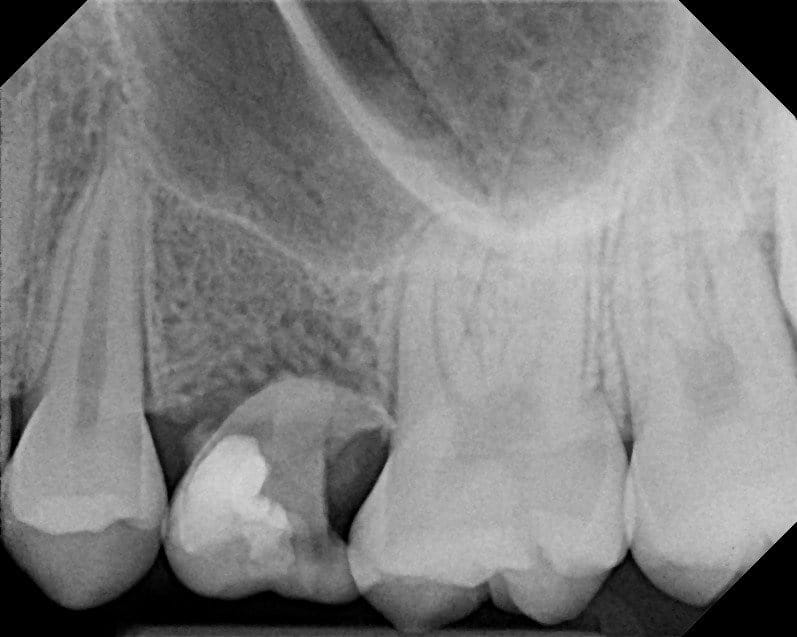
 Dizziness is a rare complication that can occur in patients that have an internal sinus lift for dental implants in the upper jaw.
This is called vertigo. More accurately it is called benign paroxysmal positional vertigo – BPPV.
In my private practice over the last 14 years I have had extremely few patients that have developed this short-term, reversible vertigo that makes you feel dizzy and at times nauseated. It is much more common in the elderly patient.
Refer to these links to learn more about internal sinus lifting and the basics of sinus bone grafting
If you don’t have 10 mm of bone in the upper jaw, the sinus has likely expanded and 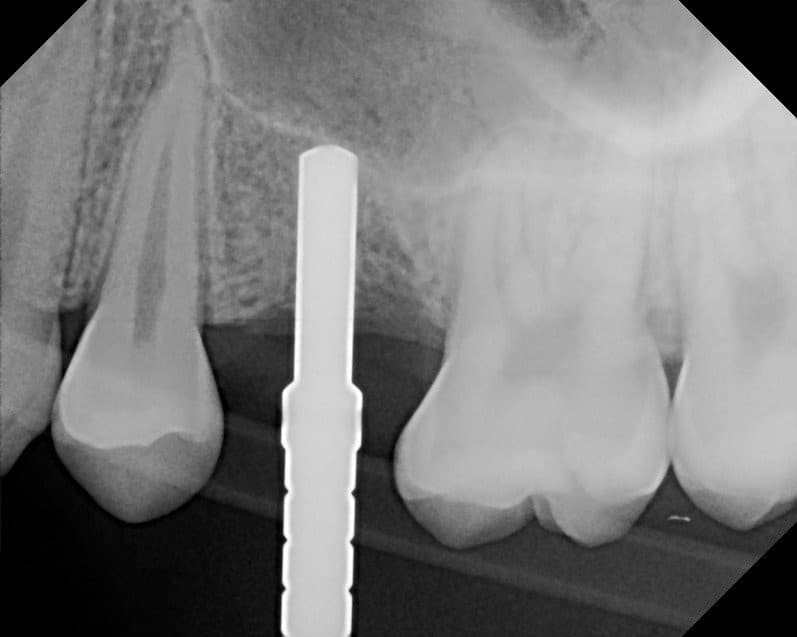 you will need some type of sinus lift. This will give you an adequate amount of bone height to replace your upper molar teeth.
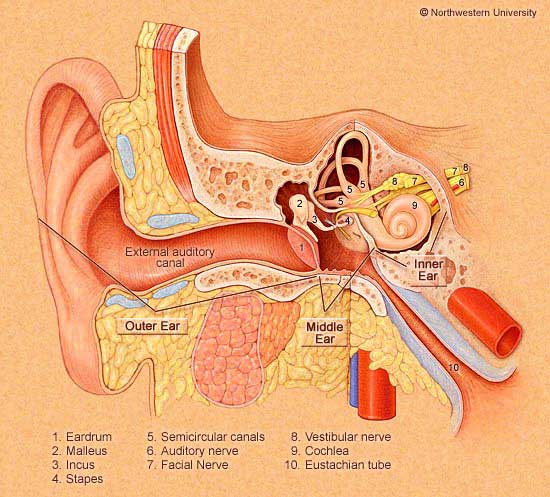
The procedure is done by using an osteotome instrument and percussion taps from a surgical mallet. This lifts the bone and creates a tent over the top of the implant. Bone is added through the implant hole. The slight tapping of the surgical  mallet while you are laying down in a possibly hyperextended neck position can temporarily throw off balance in part of your ears. Inside your ears there are inorganic particles similar to crystals called otoliths. Your otoliths can be displaced in the fluid of the semicircular canals of your ears. Since our ears are responsible for balance, the temporary displacement of the otoliths can give you this temporary feeling of vertigo.
If you have had a problem with dizziness or vertigo in the past make sure to tell this to your dental implant specialist before having this procedure done.
The diagnosis of this type of vertigo is established by inducing a rapid change from being seated to the left or right head hanging position. If you really have it, your eyes will become a little shaky; that is called nystagmus. If you don’t get this shaking of the eyes, then you really don’t have vertigo.
Fortunately very few patients develop this and it is a self-limiting disorder. It generally goes away on its own within a month and in fact it usually goes away within 10-14 days. The Epley maneuver is used to treat patients that have vertigo that does not go away.
I like to do what is most likely to prevent this from happening. I am very cognizant of head position during this tapping of the surgical mallet. I believe it is key to be moderately sedated using IV sedation so that you are comfortable throughout the procedure. The benzodiazepine medication that I administer in the IV is often used to treat vertigo. So it is possible that having IV sedation may greatly decrease the chance of developing dizziness after maxillary sinus lifting for implants.
There are many other techniques including a densification technique. This works in some cases where minimal lifting is needed but still rattles your head during the procedure.
If your body is not stressed and your neck is in a good position, excellent dental surgery techniques will usually limit the force placed on the mallet or drill. This should, in turn, decrease your unlikely chance of dizziness/vertigo after having an internal sinus lift.
Please share your comments and questions below!
Ramsey A. Amin, D.D.S.
Diplomate of the American Board of Oral Implantology /Implant Dentistry
Fellow-American Academy of Implant Dentistry
Burbank, California
Hi DR Amin,
7 weeks ago I had an sinus lift/bone graft. I haven’t been the same since. The day after I was dizzy and felt a lot of head pressure. After a few days a called the surgeon to address the dizziness. I was told to take Sudafed. That didn’t help, I did my own research and found the Epley maneuver, it did help and eventually it got better. I still feel like my balance is off but the biggest problem is the head pressure (feels like a constant headache) never goes away. I’ve been back to the surgeon’s office 3 times, she can’t find anything wrong. She put me on 2 rounds of antibiotics just to make sure it wasn’t an infection. I’ve had no issue with the implant area, no issue with my nose etc. I’ve been to my Primary care to check for ear infection or anything else. I was referred to a ENT but they said go back to the surgeon. Im considering having the implant taken out, not sure if that will stop the headaches but im somewhat desperate. Any thoughts on my situation? I’d appreciate it.
Hi Mary,
What did you end up doing? This comment was in our spam folder for months! Sorry!
Dr. Amin
Hi, I’m currently 5 1/2 months post op from having 2 dental implants, bone graft and sinus lift in my upper left jaw. Immediately I noticed vision problems, balance issues, next came the severe pain and pressure in my face and whole head. I went to the emergency room 3xs over the course of a month, it was the worst pain in my life. 2weeks post op I developed vertigo and lost my ability to drive. After 5 months I got in to see an ENT and he can’t see anything wrong. Another periodontist says nerve damage. He also review my surgical records which were vague but mentioned I had too much sedation necessary for the procedure also a mallet was used. I’m almost 6 months post op and still can’t return to work because my vision issues, dizziness and headaches and pressure. I also now have high bp because of all the stress of this. I can’t get anyone to send me to a neurologist. What would your advice be. I’m suffering.
Thank you,
Jill
This is a highly unusual story. Am sorry that you are having any trouble. I think something else may be going on and this is probably coincidental. By now this would have all resolved. Why not self refer to a neurologist? Have you had a few opinions by some really good dentist surgeons? A mallet is not uncommon and does not make this a problem as long as it is used in a certain way. I am thinking something must be going on that it is not related to the dental procedure. I am sure you have looked up in the world of vertigo something called the Epley maneuver. If not please check it out on Google but certainly get to a neurologist!
Hi, thank you for responding. Only 1 periodontist/implant specialist has diagnosed me and he has said it’s nerve damage. I called many oral surgeons and no one wants to get involved. It’s a constant pressure sensation in my face and head. I had a CT months ago and it was clear. My vision is still off in busy places. I can’t go into stores, it all started immediately after the surgery.
I’m in Canada and I don’t think you can self refer yourself to a neurologist. I had done the reply maneuver many times early.on and then by physio in the early days. A lot of my symptoms also mimick a concussion.
There is always a way! Don’t give up!!
The Article is spot on as it describes my experience. I had severe vertigo, associated nausea, and headaches.
It was interesting that my wife figured out what was going on. the surgeon basically ignored her when she discussed my symptoms with him. I wish doctors would be more receptive to listening and understanding that we are individuals and can react differently.
It was my wife that got this figured out and got me medication that helped me reduce the symptoms to almost nil by day three.
Thank you for reporting this! I hope you are well!
What kind of medication did you take?
Hi there – I had a sinus lift on Aug 14 2023 from a highly skilled surgeon
In LA. Unfortunately on the day of the surgery, I had a terrible bout of vertigo. The subsequent dizzy spells lasted for 4 weeks. My surgeon said in all his years this has never happened. But it did – to me. I went to an ENT who put me on a steroid “dexa something” for 5 days. The weirdest part is the surgery was on my left sinus, but all the pain and pressure causing my ear to detox was on the right side. My ENT couldn’t explain this.l but in addition to the steroid, He also had me take lorazepam at night to calm the inner ear down. After a few weeks of this, I am considerably better, but I do still find myself getting dizzy every now and then for no reason. It has scared me enough that I’m posting anywhere I can so others are aware of this potential side effect. I wasn’t. It wasn’t listed on the long sheet I signed before they did the procedure. Had I know this could happen, I would have gone with a bridge. I’m only 47 so that would have been a bummer, but not as big a bummer as wondering if the vertigo or dizziness will strike again out of the blue. It was hell, and I don’t recommend the surgery if you can avoid it.
Hello,
Thank you so much for reaching out and sharing your experience. I’m genuinely sorry to hear that you’ve been dealing with vertigo and dizziness following your sinus lift surgery. It must have been quite concerning and uncomfortable for you, especially when it’s something you didn’t expect at all.
I can understand why this experience would make you hesitant about the procedure and concerned for others who might be considering it. It’s really important to feel informed about potential side effects, and I’m sorry that this wasn’t on the list of considerations you were given. Your wellbeing is the most important thing, and it’s clear that this has been a significant ordeal for you.
As a surgeon who has performed over 2,000 of these procedures, I can share that what you’ve experienced is extremely rare. In fact, a situation like yours hasn’t occurred with patients I’ve treated. That being said, each person is unique, and our bodies can react in unexpected ways to different medical interventions, no matter how routine they might be.
Vertigo can be influenced by a complex interaction of factors, and sometimes, despite it coinciding with a procedure, it might not be directly caused by the surgery itself. It’s possible that the stress of the procedure, or another unrelated factor, could have contributed to the balance issues you’ve experienced.
It’s reassuring to hear that you’ve been under the care of an ENT specialist and that the treatment has been helping you to feel better. Vertigo can be quite disorienting, and it’s good to know that your symptoms are improving, even if it’s been a slow process.
I want to reassure you that long-term effects from sinus lift surgeries are exceedingly uncommon. However, your feelings and experiences are valid, and it’s important to continue monitoring your symptoms and working with your provider to manage them.
Your story is an important reminder that medical procedures, no matter how common or straightforward they may seem, carry different risks and experiences for everyone. It also highlights the importance of having thorough discussions with healthcare providers about all potential risks and side effects, even those that are very rare, so patients can make fully informed decisions.
Hi Dr – thank you for responding to me. I really appreciate your thoughtfulness. I’m happy to report that I’m now finally feeling 99% better. The dizziness is almost non-existent. I’m still unclear if it was caused by the surgery or not – I learned a few weeks later from 2 seperate health officials that there was also a strange virus going around LA that was causing vertigo. The timing seems odd (mine started about 3 hours after surgery and lasted for about 6 weeks) but maybe it was just bad luck on my end. Anyway – just wanted to make sure anyone reading this thread knows that it did eventually go away. But to be honest – I won’t ever do a sinus implant again now that I saw what could happen. Ughhhh. Take care – thanks again for the advice!
Thank you for this and THANK YOU for the follow up!
What’s the steroid med that you took called?
I had a sinus lift where the dentist had to use the mallot on my upper jaw right side. He had bang the crap out of my jaw to move the sinus. It was probaly 40 or more bangs and I had to have him stop because it was rattling my head so much. A few minuits after, I almost lost consciousness in his chair. I had to be picked up because I kept almost passing out. To this day, 6 months later, I still almost get these pass out spells. Please help!!!!
Any ideas
Oh Gosh –Have an ENT MD look at your ears. They would be best. They may suggest a steroid.
Hi! I just had a molar extraction ( top, right, 2nd to last), bone graft and implant put in all in one swoop since I was under anesthesia. This was on 2/8/23. I experience terrible vertigo when turning to the right. Surgeon said to take Zyrtec in am and Benadryl at bed. It’s def much better but my head is still off, dizzy, foggy feeling. I have been doing lots of exercises and still not 💯 relief! HELP!
That is really odd. In 23 years of this procedure I have not seen it on any of my patients personally but I have treated several with it. Have your dentist consider an oral steroid. You might want an ENT to look at your ears if it doesn’t resolve. Sorry about this!
Hi Dr I had a dental surgery extracting 10 lower and 5 upper teeth and was installed with 24 implants 12 upper and 12 lower in same day procedure from 12:30 in afternoon to 6pm under repeated anasthesia and started having dizzy spells once I switched from liquid diet to solid diet using dentures after 4 weeks . Surgery was on 17th Feb and dentures were installed on 12th March . Dizzy spells take place when lying down in afternoon or night when sleeping on bed
Hmm…I am not sure I am following this. You said you had teeth installed right away but then you said it was a month later? When did the dizziness start? If it were from the sinus lift it would be immediate. Please clarify
Good Day
Please note Implants were installed after removal of all upper and lower remaining teeth on 17th February . I lost about 18lbs from 17th Feb to 12th March. I was on liquid diet till 11th March and on 12th March I received the dentures and started eating solid foods from 12th March . The Dizzyness cycles started on 12th March late night when I went to bed for few minutes. Whenever I used to go to bed I used to get these dizzy cycles till few days back. Now it has reduced . I think this dizzyness cycles were due to quick loss of weight of 18lbs together with having too many shots of anasthesia and pain killers . Is that right ?
Best regards
Kapil
Maybe the weight loss but not from anything else. Go see your doctor!
Hi Doctor Amin! Back in 2018 of June I had had a broken root canaled tooth on #6 canine from a previous fall on face at work in 2013. The tooth was broken down to the gum so the oral surgeon/ doctor put me under with iv sedation to remove the upper #6 tooth and bone grafted it with cow bovine and a PRF centerfuse of my own blood fibrin he said for healing. Since then I’ve had really bad balance/vertigo problems and facial pain and pressure in my ears and constant ringing in my ears and neck pain and weakness in my legs. Never had these symptoms before the fall on my face and broken cracked teeth especially on #6 which was extracted due to down to the bone and infected he told me. As being a athlete in great health and a surfer for most of my life, I’ve never have experienced anything like this before my fall and the tooth extraction. Could the broken tooth and the bone graft material he used possibly has given me the extreme pressure in my face now and the extreme vertigo/balance issues I have still after the proceedure? He had taken a post cone beam CT scan and saw no infection. He said possibly my fall on my face and other face pain and extreme headaches I have maybe set something off in my brain and middle ear could be causing my vertigo although there is a lot graft material like a small lump where he grafted the bone. I’ve also had a brain MRI that came out normal. What do you think went wrong causing my extreme pressure in my face and bad vertigo problems and headaches I now have to live with? I’ve had serveral blood tests to rule out other possible problems but they all came back extremely normal as exspected because I eat very healthy and don’t smoke nor take drugs of any kind except the amoxicillin he put me on. I was a very healthy in great physical shape before all this happens and now suffer this issues. Could this had come from the broken tooth and extraction and bone graft which still is tender to the touch?
Oh gosh! 😥
Could the broken tooth and the bone graft material he used possibly has given me the extreme pressure in my face now and the extreme vertigo/balance issues I have still after the proceedure? –Short answer NO
Most of balance problems happen from the inner ear. Be sure to see an ear nose and throat physician. Somebody needs to look in your ears very carefully. Dental problems even as bad as you have had will not cause the type of symptoms that you have.
Be sure to look up the Epley maneuver. Sometimes this can fix chronic vertigo. Also research Ménière’s disease.
I hope this goes away.
Hi Tim, I am seeing your post a few years after you wrote it. I hope your symptoms are all resolved. I wanted to tell you that I experienced terrible spinning vertigo from a problem in my inner ear. When that was treated, a different version of vertigo (no spinning) but off balance, stayed with me for months and months. After many doctors etc. it was discovered to be a problem with the tracking of my eyeball (caused by the original vertigo). It was treatable! I saw a neurologist/optimologist at NYU Langone in NYC named Dr. Napor. She put me through specialized tracking exercises and I got my life back. Just want to share incase you are still suffering and have not had your eyes checked in this way. They are a major part of your vestibular system. Look up PPPD for more info. Best of luck to you, Kathy
Hi Doctor Amin! Back in 2018 of June I had had a broken root canaled tooth on #6 canine from a previous fall on face at work in 20
I’m 70 and 2 days past a sinus lift for an upper molar implant. I went looking for information on my symptoms and am grateful to have found this.
The dentist reported she had seen only one patient before with new bone as hard as mine. Which would be a good thung, except that the (euphemistic) “tapping” during the three progressively wider steps had to be done so hard I was seeing stars. I was shocked at the force of the blows. This was done with only local freezing and I probably tensed my neck to an extreme, all 3 times.
For the first 24 hours I was fine, but I had noticeable vertigo and mild confusion. Then the headache developed.
Last night was very bad. I had the worst headache of my life, any attempt to get out of bed resulted in nausea and incipient need to vomit. Even the simplest tasks were beyond doing. It took half the night to summon an attempt to take headache medication, and when I did, I vomited. By this time I was wondering if I had a concussion.
So I thank you for making this information available.
Oh gosh!! Are you better now? 🙏
Oh gosh. It sounds like the bone wasn’t thinner enough before the mallet. It does not take hard hits…
How are you doing now?!
What specifically in the post helped you?!
Hi, I recently had a tooth extracted and I am now in the process of waiting until I get the implant.
I recently just had a c.t of my sinuses and the Dr said that some teeth are coming through the sinus floor because it is so low. I am concerned about getting the implant and having come through my sinus floor. How would they handle this situation?
Also above the extracted tooth is a screw that was inserted 30 years ago after I was hit in the face, they built up my cheek bone. Worrying if this will cause complications? Most importantly can any of this and my low sinus floor be related to my constant tinnitus which is on the side where my molar was extracted? thanks
Due to so many gum desease surgeries, failed root canals and constant redos on crowns, I decided about four years ago to have all my top ten teeth pulled. Six months later I decided to try implants even though there was no bone. I first had the sinus lift surgery, six months later, implants were placed, six months later they were removed because they did not take.
The surgeries were very painful changed my facial features from so much bruising. It has been over two years now and after the surgery had dry nose issues from the sinus lift.
But now I am experiencing vertigo issues. It happened once a month ago but in the last week becoming regular daily issues. I feel woozy when I stand up. When I am laying down and move to each side, woozy. After reading all the above issues, I am wondering if there is a solution? The other patients seemed to have vertigo right after not years later? Do you have any advice? Thank you
oh gosh….you likely have vertigo just because…not due to the implants. My mom had it and she had success with the Epley Maneuver
Zygomatic implants can be a good option for you.
Sorry for the delay, I wasn’t monitoring this discussion.
I continued to be quite ill with the symptoms I mentioned plus others including visual disturbances. After two days I consulted the dentist who took me off all medications for the procedure. After 10 days I consulted my doctor who said I should go to emergency. The visual problem (blurred and “vibrating” partial field of view) seemed unrelated to the inner ear, but consistent with minor stroke. Blood work and head scan revealed no issues, so the emergency doctors advised me to resume normal activities as I felt comfortable. Overall it took about six weeks for all symptoms to go away. The implant itself seems perfect.
Wow! I know that it is possible that these types of mini strokes ( TIA) can occur without any sort of findings. Thank you for following up and I am glad you are okay 🙏
Hello, I recently had 1 tooth implant done. I think it’s called #20 Molar, the actual implant was done a few months ago which went very well and the final step was done 7 days ago. I have not felt good since, the tooth feels large, it’s causing friction on the cheek of my mouth and my tongue is always on the tooth. The tooth is slightly lower than the tooth in front, so my bite is naturally on the right side always to avoid stress on the right side of my mouth. My dentist says this is all normal (large tooth, lower than the others). My gut is telling me to remove the tooth and redo it. Your thoughts? Thank you,
so I recently had an implant done for one of my front teeth and roughly two weeks after the procedure (a mere day after I got my stitches out) I began to suffer from random bouts of vertigo, sometimes mild, sometimes severe, sometimes right when I wake up and some times it kicks in during the afternoon; I haven’t had any major lifestyle changes in the past week apart from the implant. So are these conditions consistent with the diagnosis above? if so, will it go away on its own or do I need to seek medical help? if not, what other possible reasons could there be for this.
Usually will go away on its own. This is not common for upper front but rather upper back teeth.
I have really good, strong bone structure and I had a large molar pulled (due to a abscess). The dentist had a difficult time extracting it and he literally pounded (hard) on me using some device to extract the tooth. He did this repeatedly for a long time. When I sat up, I was extremely dizzy. The initial dizziness went away after about 10 seconds. Now, 1 week later, when I lie down, I become VERY dizzy.
with this in upper molar?
Dr. Ramsey,
I had upper left jaw implant done on May 15. Severe vertigo started on about May 30th. I continued even after Epley manuever helped somewhat. I felt implant pressing on upper nasal cavity. Had panic attacks. Finally had implant removed June 24. Could breathe through the nose hole with mouth when mouth was closed. Still experience severe vertigo; MRI was all good. Fear that implant penetration damaged nerves.
Many Thanks for any insight.
Why to lift sinus ? Y can’t u place implant with angulated towards premolar region
Not always possible and all scenarios but yes sometimes I will angulate away from the sinus especially in full arch reconstruction of a patient missing all upper teeth and or zygomatic implants.
Hi My Name is Rajender Sood and I am an Indian but now residing in Melbourne, Australia. I have had all in six dental implants on lower jaw and four on upper jaw nearly fourteen months back and since I was 51 years of age and hence I was told that I have to have bone grafting to place all the implants. Since I mentioned four implants on upper jaw and hence i was told that I also required sinus lift to make the space for implants (I think). Everything was okay but after two three days I start getting watery eyes and then I was asked to do the steam twice a day and one tablet to relieve the nerve ( I think). After sometime everything was okay again. And they put temporary implant (Acrylic). Now, After fourteen months again I have some issue with my eye and I was told it is not cataract and my vision is foggy but I can see very clear and very but this foggy eyes giving me a problem. Do you have any idea if this is related to my upper implants, bone grafting and or sinus lift as eye doctor says this is not cataract and he can’t operate this.
I am concerned about having a sinus lift. I have severe hearing loss (otosclerosis) and tinnitus. I also have idiopathic angioedema. For this reason I have chosen to do a bridge as opposed to an implant. My dentists says that I need the sinus lift for proper bridge placement. I am concerned that this precedure can affect my hearing balance and tinnitus.
I avoid antibiotic use as it has affected my hearing loss in the past.
Your input is greatly appreciated.
If no implants than absolutely NO REASON for a sinus lift!!!!
Nancy here again. In reply to your answer to me Dr., all my symptoms began immediately after the implant procedure, I mean the very next morning and have not stopped. I was advised to have the implant removed due to the problems and did so one month after implant. But the symptoms continued. I had Epley done, and a brain MRI which showed nothing. The procedure was very jarring; all 3 neurologists that I saw agreed the procedure “set something off” that has not healed, again over these past 6 months. All they did was offer medications for migraines. I did have a bone graft done prior to the implant. Could my symptoms of constant equilibrium problems, ear ringing, and migraines, as well as occasional dizziness and nausia be caused by the sinus falling and not being lifted to the proper place before the implant? If so, can it be fixed now that the implant was removed 5 months ago? I was also advised not to get a bridge yet due to my symptoms. I honestly am reaching for answers. Any more thoughts Dr.? Thank you for your time.
Nancy.
Unless there is a fistula in your sinus, the previous graft is likely not the cause. Somehow like you said this all get set off somehow. The ear crystals should be able to stabilize by now if this were the case. Sorry.
Question:
I am over 50 and had an implant in upper jaw 6 months ago. Prior to implant I was extremely active and healthy. But since implant, I have had constant equilibrium problems, ear ringing, and migraines, as well as occasional dizziness and nausia for the past 6 months, which all started immediately after my implant. I have been to 3 neurologists, ENT, spine specialist, and vestibular therapist, and my symptoms have NOT improved. Neurologists are mixed on diagnosis, ENT said no issues there, spine specialist said neck looks fine, and just started with vestibular therapist for equilibrium issues. I am desperate. Please help!!! Do you have any advice on how to treat my symptoms?
This is not likely due to the dental implant. It is very coincidental but not likely related especially if it has lasted this long. I may have mentioned to people commenting to try the Epley maneuver with a chiropractor if vertigo is your problem.
If you really feel it is the dental implant, you can have the implant removed and see if that helps. I really help you get better. I assume you’ve already had an MRI to check for any sort of brain tumors etc.
Dear Nancy,
Brain MRI is unfortunately not very reliable if one has diffuse axonal injury (DAI); even in most optimal time, that is within first weeks after trauma it shows only less than 60 %. Far better method is diffusion-tensor-imagin (DTI) / tractography. Most sensible “test” is careful neuropscyhological examination that can reveal if there are changes in your cognitive functions, for example in memory.
I am lawyer but after 145 TBI and whiplash cases, I dare to say this.
Vesa Laukkanen
I was on oxycline as an anti-biotic. The vertigo started on the 7th day of the pill and I did get sick to my stomach. I stopped taking them. On the follow-up with the dentist, he said he didn’t see anything and the bone graft looked like it was healing nicely. Had no explanation for the Vertigo. In the 11th or 12th day of healing, my inner ear would hurt on occasion and I assumed that somehow, I just managed to get an infection. The reason I say this, is because in the three times I got sick, I only coughed up phlegm and with that there was some sneezing. Finally after the third time of becoming ill, I started to feel better. I am currently on AMOX-CLAV 875-125, and have cut them in half because I feel a little light headed taking two regular doses a day. I figured by cutting them in half, it might help reduce the side affects. The vertigo has finally stopped. My guess is that somehow, I got an infection in the sinus because the dentist had commented that the broken tooth was close to the sinus and he had to do some digging to get out the roots. A particle of tooth or something could have worked it’s way in.
Thanks for the update. I wouldn’t split the antibiotic in half. It becomes a subclinical Dose and may create resistant bacteria for you.
Thanks for this article. Had a Bone implant done a little over a week ago and also having trouble with horizontal vertigo. Never ever had this before in my life. Actually, got up the other morning, was fine for a half hour and then half way through breakfast, I actually got sick to my stomach. This all started right after the broken tooth was pulled and the bone implant was done. I hope this does go away soon.
People often get dizzy from antibiotics or pain medicine. I would rule those out first. Unless you have a vertical sinus lift vertigo and dizziness would be uncommon. I am assuming you were on an antibiotic.
Do you believe it is possible to get a neck injury from sinus lift operation, where too much force is placed on the mallet? We have a client who had this operation, her bone was so hard that the obviously too much force was placed on the mallet. She felt her whole body move during the malleting. This operation was performed 2010 and she never recovered like in the cases of BPPV. She had all the BPPV treatments. She has a serius neck trauma visible in the MRI scans. She has had no other traumas. She has been permanently disabled ever since the operation. Before the operation she was totally healthy and the symptoms started during the operation where she almost become unconscious during the malleting.
We would gladly pay for your consultation.
Best regards
Jere Laukkanen
Office manager
Law Office Vesa Laukkanen
Finland
It sounds crazy that anyone would use that type of force on a human skull. I don’t think this is possible
Ramsey A. Amin, D.D.S.
Diplomate of the American Board of Oral Implantology /Implant Dentistry
Fellow-American Academy of Implant Dentistry
I am getting a sinus lift (and implant) next week at 2.7.
Your article scared me a little now. I had a vestibular neuritis a few years ago and it was horrible. Now I am afraid the upcoming sinus lift will cause the particles in my ear to be out of balance again. I read in the published medline article (https://www.ncbi.nlm.nih.gov/pmc/articles/PMC2872812/), that the surgeon should apply malleting gently to avoid this complication. Is that even possible? To lift the sinus a certain degree of heavy malleting is necessary, isn’t it. That would mean the advice of gentle malleting is kind of useless? Is there anything that could be done during the surgery to minimize the risk? Maybe changing the head/body position a little while malleting is done to ‘reduce’ the hyperextended neck?
Any help is appreciated.
Thanks,
Marc (from Germany)
This does not happen often but of course it can. Skill and experience are #1 indicating to prevent this occurrence. The technique can also be done through a lateral window approach rather than an internal lifting. The internal lifting often requires some type of mallet. The balloon techniques do not work. The lateral window technique requires no mallet whatsoever.
I would highly advise that you have IV sedation for this procedure and have intravenous steroids such as dexamethasone.
After sinus lift and bone graft or vice versa over six monts back , i having suffering from heavy head, constantly leaky nose and burning discharge trickling from the back of my throat.
After my experience i would never recommend sinus lift and bone graft to anyone at my age of 70, considering the discomfort i am going through.
A denture would be a far better, less expensive, cleaner alternative.
Hi Tehmul,
What you are experiencing may not be related to your sinus graft. In 17 years of personally doing this procedure I have never seen this before. Was this performed in the United States?
How he had a postoperative cone beam 3-D scan taken? Is the sinus drainage hole open as it naturally is? Have you visited an ear nose and throat doctor? Was your dentist new at this or very experienced? I have done this on 90-year-old patients without any trouble. Age is not a factor.
Ramsey A. Amin, D.D.S.
Diplomate of the American Board of Oral Implantology /Implant Dentistry
Fellow-American Academy of Implant Dentistry
I had 3 implants in my front teeth 4 weeks ago and I am now suffering from vertigo. I cannot lay down on my back and I cannot move my head up or down, how long do you think this will take to go away? it’s a lot better but still here 4 weeks later I feel sick and I cannot stare at anything for too long as this makes me feel reading light headed.
Did this ever resolve?
Hi Dr. Amon:
Thanks for this interesting article. I found it as I was searching for the cause of vertigo that started occurring after a sinus lift… I tried the Epley maneuver and a few times it helped. Last time it did not, so based on my physician’s advice I had an MRI. Luckily it doesn’t show anything out of the ordinary.
I have a question. Can this also happen (in a similar way for similar reasons) in conjunction with the next step, surgery for the actual implants? Thanks in advance.
I had tooth 30 pulled due to cracked root canal and bone graft done. Tooth 29 began throbbing 3 days after graft and moved up around 1/8 inch, not loose but sensitive to cold. I was told it was inflammation and not the graft that cause that tooth to move upward out of its socket. I have been experience vertigo since this procedure and I am concerned about proceeding with implant. Most of the vertigo is occurring on the right side. I am also concerned that 29 will be further damaged when the implant is done. I was put on antibiotic and anti-inflammatory meds prior to and after bone graft.
I need another opinion if I should do the implant.
2 weeks ago I had what I believe is my 3 molar extracted, a sinus lift and a bone graft. They did this because since I was in 5th grade I have not been able to bite on the right side of my mouth. My jaw never grew down, so it has been unlevel. My oral surgeon was going to do a segmented osteotomy, but after some different consultations, the Drs came to the conclusion that the reason my jaw didn’t grow down is because my third molar is ancolosed (or fused to the bone) in my sinus. So when they removed the tooth, there was a hole. They filled it with particulates bone graft and put a membrane on it, but the membrane was exposed because my gums couldn’t be stocked over it. 3 days ago, I began to have air come through the area. I figured out that there is now a hole where the bone graft is supposed to be. My oral surgeon said that my bone should grow in a fill the hole. It’s just really annoying having a hole connected to my sinus. There is not a lot of pain, but I just want to know that it’s actually going to fill in. Any advice?
Hi Heidi,
It sounds like you have a unique situation with an ankylosed third molar. More than likely when the tooth was removed it created a perforation between your mouth in your sinus. We called us an oral antral perforation. I’m sure your dentist was very skilled at the removal and oftentimes this cannot be avoided. I hope you are not a smoker or a diabetic as this would slow down the potential spontaneous healing of this hole. If it does not close on its own it may require a second surgical procedure to cover over the hole.
Be sure not to sneeze with an closed mouth for at least 14 days, do not blow your nose hard and do not submerge your head underwater such as in a pool. Do not do any sinus lavages such as a Nettie Pot. See your dentist and consider having a 3-D CBCT to monitor healing. When this is all said and done, you can then have the dental implant to replace your tooth #3 which we called the upper first molar. You may require an internal sinus lift if the bone is still decent.
These link should help you:
Upper Molar/Internal Sinus Lift 3-D Scan Real Time Dental Implant Before and After Planning Video –Narrated by Ramsey Amin DDS
Ramsey A. Amin, D.D.S.
Diplomate of the American Board of Oral Implantology /Implant Dentistry
Fellow-American Academy of Implant Dentistry
Good Morning Dr. Amin,
I am 3 weeks s/p sinus lift and completed a 10-day course of Clindamycin – there was no tear or puncture of the membrane during the procedure. Sutures were removed after one week and everything looked great. Over the last few days, I have woken with a sinus headache, presumably because while lying flat over night, sinus drainage has not had the benefit of gravity. I have been taking Advil and begin to feel more human several hours into the day. On my way to pick up a decongestant in hopes this will help – don’t want to begin another course of antibiotic if this is simply due to inflammation and swelling post procedure or even allergies – I take Zyrtec every bedtime. Is this just a coincidence or is it common to develop this problem after 2 weeks? Woke up last night with some throbbing at the surgical site which I also thought was odd as otherwise, it looks great and is not swollen. Any thoughts? Thank you!
Did you have an in office 3d scan after the procedure?
I do this procedure extremely routinely and it is not often that I hear someone have the type of problems your describing. Did you have any growth factors such as L PRF, PRP? IV sedation and intravenous steroids/Antibiotics helped tremendously also.
Sedation
Antibiotics for a Tooth Infection, Dental Implant, Bone Graft… Do I Need Them?
Respectfully,
Ramsey A. Amin, D.D.S.
Diplomate of the American Board of Oral Implantology /Implant Dentistry
Fellow-American Academy of Implant Dentistry
Hi,
Thanks for the article, it’s very helpful, especially as I was beginning to feel quite scared of my condition with similar symptoms I have and your information has helped relieve some of the anxiety I was feeling.
In mid-December 2014 I had sinus uplift surgery AND dental implant fitted at a very reputable surgery in Bangkok (which is 8000 km plane trip from my home on the West coast of Australia)…
At first I didn’t notice any side effects other than a general feeling of fatigue in the recovery phase after these procedures. Upon flying home some ten days later I am now noticing instance of vertigo, the symptoms of which seem to categorize this as benign paroxysmal positional vertigo, characterized by a short burst of vertigo when in the prone (sleeping) position and turning from left side to right side OR sometimes in the morning after sleep when attempting to stand from sitting on the side of the bed, which when the attack happens I cannot focus my eyes either… Interestingly the vertigo experience does not seem to have effect at any other time such as when sitting, standing or in the normal course of my working day.
At this stage I’m consulting with my GP plus as of yesterday, making time to swim daily in the ocean again as a way of perhaps “exercising” my middle ear.
Best regards,
Victor Drummond
Australia
Hi Victor,
Thank you for sharing your story….it is really uncommon. I have placed several thousand implants and internal sinus procedures and have only personally have seen this one or 2 times in the last 15 years. This video shows what this procedure should accomplish in the internal aspect of your sinus. I think you will really like it! you seem like a very technical person!
Upper Molar/Internal Sinus Lift 3-D Scan Real Time Dental Implant Before and After Planning Video –Narrated by Ramsey Amin DDS
Very Respectfully,
Ramsey A. Amin, D.D.S.
Diplomate of the American Board of Oral Implantology /Implant Dentistry
Fellow-American Academy of Implant Dentistry
I had same procedure and experienced the same type of vertigo in bed and in the morning. It has been almost three months and just two days ago I noticed it was gone when I got up. Did not consult a doctor but was getting ready to.
I had Maxillary Sinus Lift Surgery 10 days ago and since the surgery I’ve felt nausea, headaches, dizziness, and pain in my ears. I’m 61 years old and I don’t know if age has anything to do with these symptoms after this kind of surgery.
I went in for my 1 week check up and shared with my Dr stating I’m not a person that has headaches and these kind of symptoms but didn’t get any answer why this was happening.
If this is going to be a prolong condition, I’m wishing I wouldn’t of had this surgery.
Thanks
Sandy
Hi Sandy,
Feeling dizzy or having vertigo is possibly due to the technique used by your particular dentist. It should pass if this is the cause. It is not uncommon to feel nauseated and have headaches from the postoperative antibiotics. Give it another 10 days and let me know how things are going. Be sure to reference your post exactly so that I know who you are when you ask another question. Preferably cut and paste your previous question into the blog post.
Hang in there, this is rarely a prolonged condition and I’m sure you will make 100% recovery. Sinus bone grafting is extremely common in my practice. Probably do this several times a week for the last 15 years. I think I have seen at all with regards to complications and the way that patients respond to it. Most people say they had minimal pain and took Tylenol or ibuprofen. I typically use growth factors made from your own blood called PRP, PRF, PDGF and naturally occurring BMP to help with healing. I think it is a combination of so many factors including intravenous steroids that help reduce the chance of this ever occurring to begin with.
Do I Need PRP/PRF/PDGF/BMP For Dental Implants and Bone grafts?
Sinus Lift Bone Graft
Respectfully,
Ramsey A. Amin, D.D.S.
Diplomate of the American Board of Oral Implantology /Implant Dentistry
Fellow-American Academy of Implant Dentistry
Burbank, California
Dear Dr Amin,
I recently had sinus lift surgery using the surgical mallet with novocain only . I have dizziness for 2 weeks now . My oral surgeon said he was unaware that this could be a side effect of the surgery. I went to my ENT and was told it probably was from the surgery .He told me it will go away and to wait it out for three weeks and scheduled another appointment. It was slowly getting better day by day and was 99% gone on monday. Tuesday it was back like it was the 1st day.Is this normal in the process? Should I be getting the Eply ?
Thank you,
Steve
Steve,
Give it time. The dizziness and vertigo should go away on its own. Your oral surgeon did not do anything improper… It just happens very rarely.
This is one of the big reasons why I stress using IV sedation for an internal sinus lift. In the 15 years that I have done this procedure, I find that the intravenous anti-inflammatory steroid seems to reduce this complication tremendously. It also allows you to heal faster by reducing swelling. Because it is given by IV, it temporarily effects other parts of your body. For instance, if I am removing a tooth on someone that has a painful neck or back, most of the time they tell me a few days later that there neck and back pain went away for several days!! The inner ear may work the same way. I also feel like after having IV sedation, you are forced to rest for several hours without moving around after this significant procedure.
I would hold off on doing any maneuvers at this point and just give it some time. It should pass on its own.
For those of you reading this post, strongly consider using IV sedation for this procedure. I have consulted with many dentists on this topic and after informing them of my techniques they seem to have a reduction in their own complications. It also greatly reduces pain
Details of Sedation
Ramsey A. Amin, D.D.S.
Diplomate of the American Board of Oral Implantology /Implant Dentistry
Fellow-American Academy of Implant Dentistry
Dear Dr Amin,
Thank you for your quick response. I’m glad you are informing others of the IV option,I wasn’t . Your advice is appreciated. Sounds like you really care about people.
thanks, Steve
😉
Thank you Steve.
Dr. Amin
Thank you so much for posting this information online. I am 5 days post-op from an internal sinus lift/dental implant, and I have had vertigo since coming home from the procedure. I finally called my surgeon today to make sure it wasn’t a crazy side effect, and he said it was likely from just wearing myself out. I wasn’t pleased with his response, so I’ve been trying to figure out the physiology behind it (I’m a nursing student and can’t help myself) to see if there is anything I can do about it. Your explanation eased my concerns and made perfect sense. I seriously can’t wait for it to resolve and hope it does so soon.
Thank you for the info on vertigo and sinus lift! I just had this procedure done yesterday morning and by the end of the day I was feeling this dizziness and at night as I turned in bed. I was worried and decided to look for more info before I call the Oral Surgeon. I believe I must have some of the particles flying around but not many because I felt much better today, even though is not perfect. Thank you for the piece of mind!
Hello Joyce,
Was a mallet used in order to lift your sinus? I’m guessing that you’re all okay now considering it has been a few days. Sorry for the delayed reply, I had some time off for the summer.
The dizziness and/or vertigo only happens typically with the internal sinus lift procedure which is for smaller areas of bone loss. You would think that the larger sinus bone graft done through the lateral window approach would cause this, but it is far more common with the smaller internal type.
Sinus Lift Bone Graft
Ramsey A. Amin, D.D.S.
Dear Dr Ramsey Amin,
I had a tooth extraction, followed with bone grafting, in May ’14, as a result of a fractured root canal tooth. Two days after, I started experiencing flu-like and allergy symptoms. I was taking antibiotics then. I followed up several times with my dentist and another dentist – no signs of infections on x-rays. I would like to add that, since I suffer from chronis sinusitis, I had a CT Scan of the sinuses done. Which appeared to be fine, no sign of infection. I was told my issues probably stemmed from the tooth issue.
It has now been over 2 1/2 months and I am still experiencing the same symptoms on a daily basis, with dizziness/vertigo, nausea, body aches, joint pain, some pain where the tooth was extracted. I am now unable to work.
I am wondering if this could be due to the bone graft. Have you ever had any patients suffering from similar symptoms, following a tooth extraction with bone graft?
Many thanks for your response.
F. Haddad.
Hello Mrs F. Haddad,
Your symptoms are not likely related to your dental implant procedure. It is not uncommon for patients to have simultaneous medical conditions happening at the same time.
I recently treated a man for complete upper dental implants with sinus bone grafting. A few months later he became very ill. He ended up having lung cancer and dying one month later. I don’t say this to scare you, but you really should be checked out by a physician as dental implants and bone grafts do not cause the types of symptoms your mentioning.
I have many other stories just like this from cancer, internal bleeding to undiagnosed HIV.
Good luck with everything… I’m sure it will turn out well! 😉
Very respectfully,
Ramsey A. Amin, D.D.S.
Diplomate of the American Board of Oral Implantology /Implant Dentistry
Fellow-American Academy of Implant Dentistry
Hi, I’m looking for some advice on my front right lateral incisor. I have an apicoectomy done on this tooth 15 years ago. A few months ago a small whitish blister appeared a few mm above this tooth. No real pain but a pressure / aching feeling. My dentist has told me that he thinks that the tooth will need pulled as a root canal and apicoectomy was already done on this tooth..
My question is this : is this the only possible option ? is there no way to save this tooth.. its at the front so I don’t want a gap at the front of my mouth
The teeth to the right and left of this tooth are fine so if this infected tooth needs removed I don’t really want these teeth destroyed to make a bridge for the missing tooth. Is it possible to get an implant done? or is the infection in the bone and thus not an option..
Also, I’m not sure if this is related but over the past month or so I’ve had a pressure feeling in my right ear(same side as infected tooth). My doctor has given me first and second line antibiotics and although these have helped I don’t think its gone completely.. could this be linked?
Hi Shaunna,
If the tooth has to go, the infection wont prevent you from having a dental implant, but you are likely missing some bone at the apex of the tooth. The ear scenario is likely not linked unless it was a back tooth.
Good luck,
Ramsey A. Amin, D.D.S.
Diplomate of the American Board of Oral Implantology /Implant Dentistry
Fellow-American Academy of Implant Dentistry
Burbank, CA
Hello, It’s been 17 days since my sinus lift surgery. After the surgery I was healing quickly without much pain or issue. Today and for the last few days I have had vertigo and an ache with moves around my eye and down the bridge of my nose on the side of my surgery. Also, when I eat I get dizziness and nausea. Is this normal this far out from the procedure? What could this be? I called and asked for another round of antibiotics even though I don’t have have drainage. Also, periodically through the day I will get pretty intense burning in my nose. Given the symptoms I have a lot of fatigue as well.