
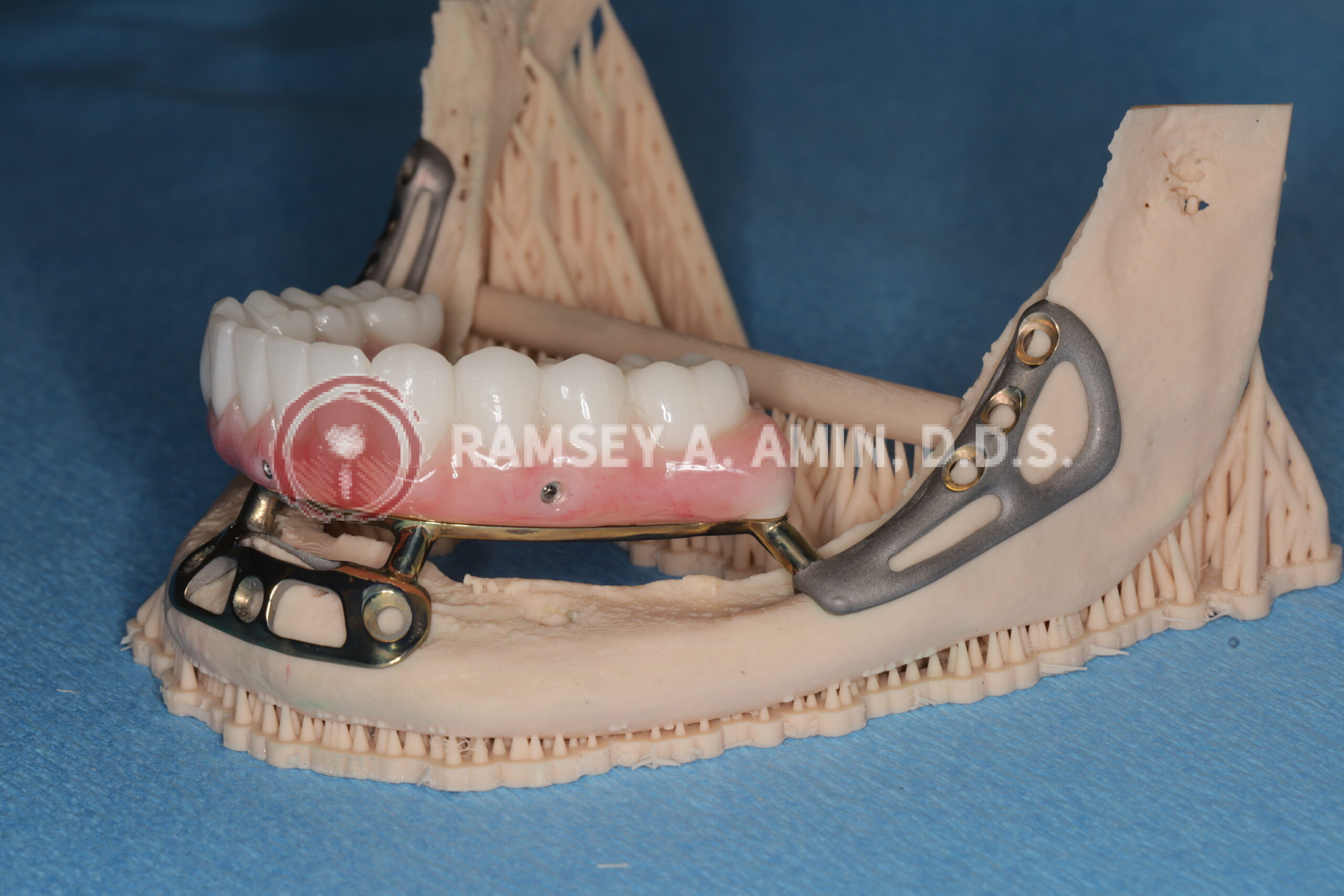
Cindy arrived in Burbank, CA at my office with a smile she could not stand and a story familiar to many who have suffered from long-term tooth loss. She wore a partial denture on her upper jaw and a full denture on her lower, but the bottom one was functionally useless.
Decades of bone loss had dissolved her lower jaw until it was pencil-thin, forcing her dentures to be made so small they would float less. The upper was falling apart as well. A custom subperiosteal implant was her only hope.


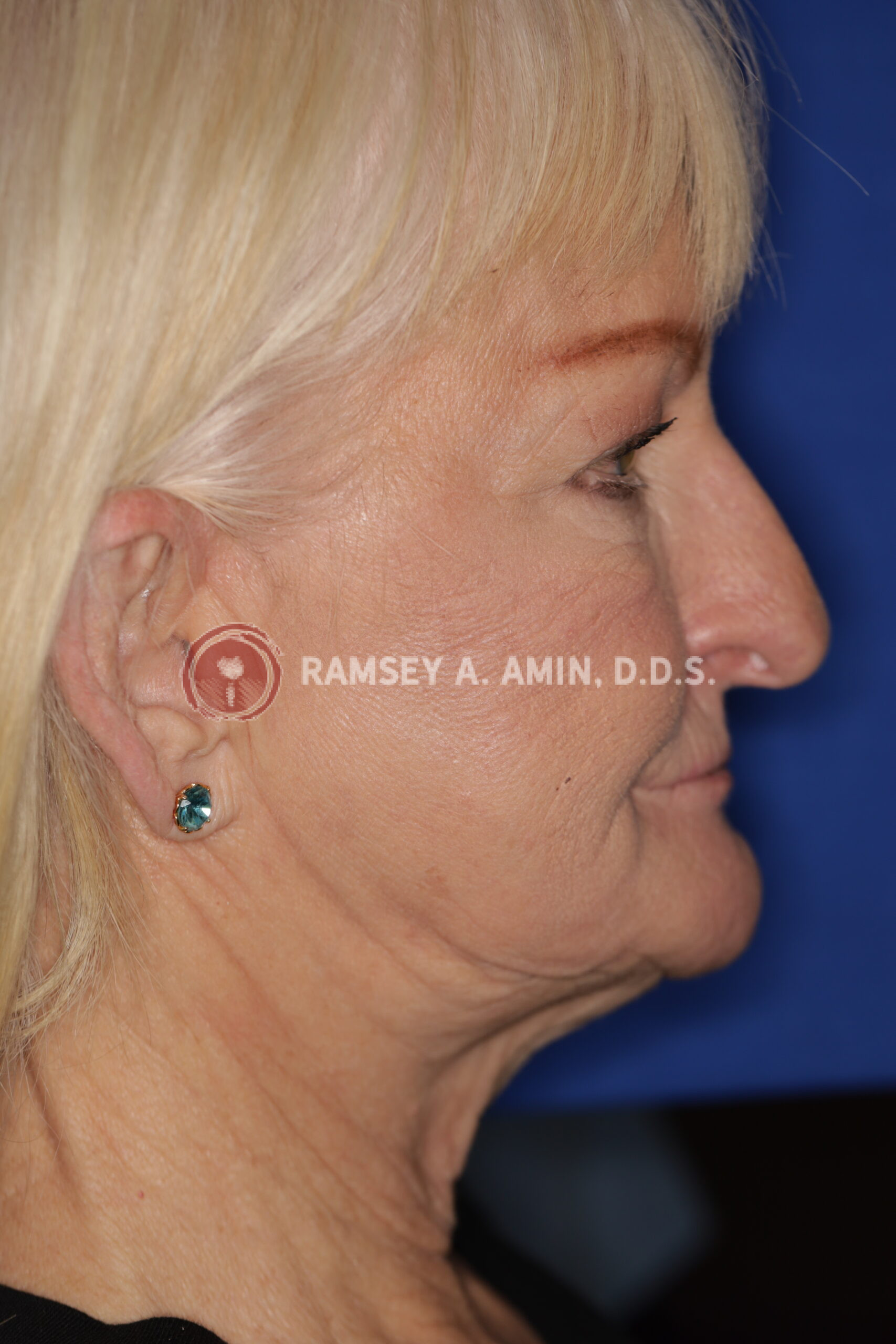
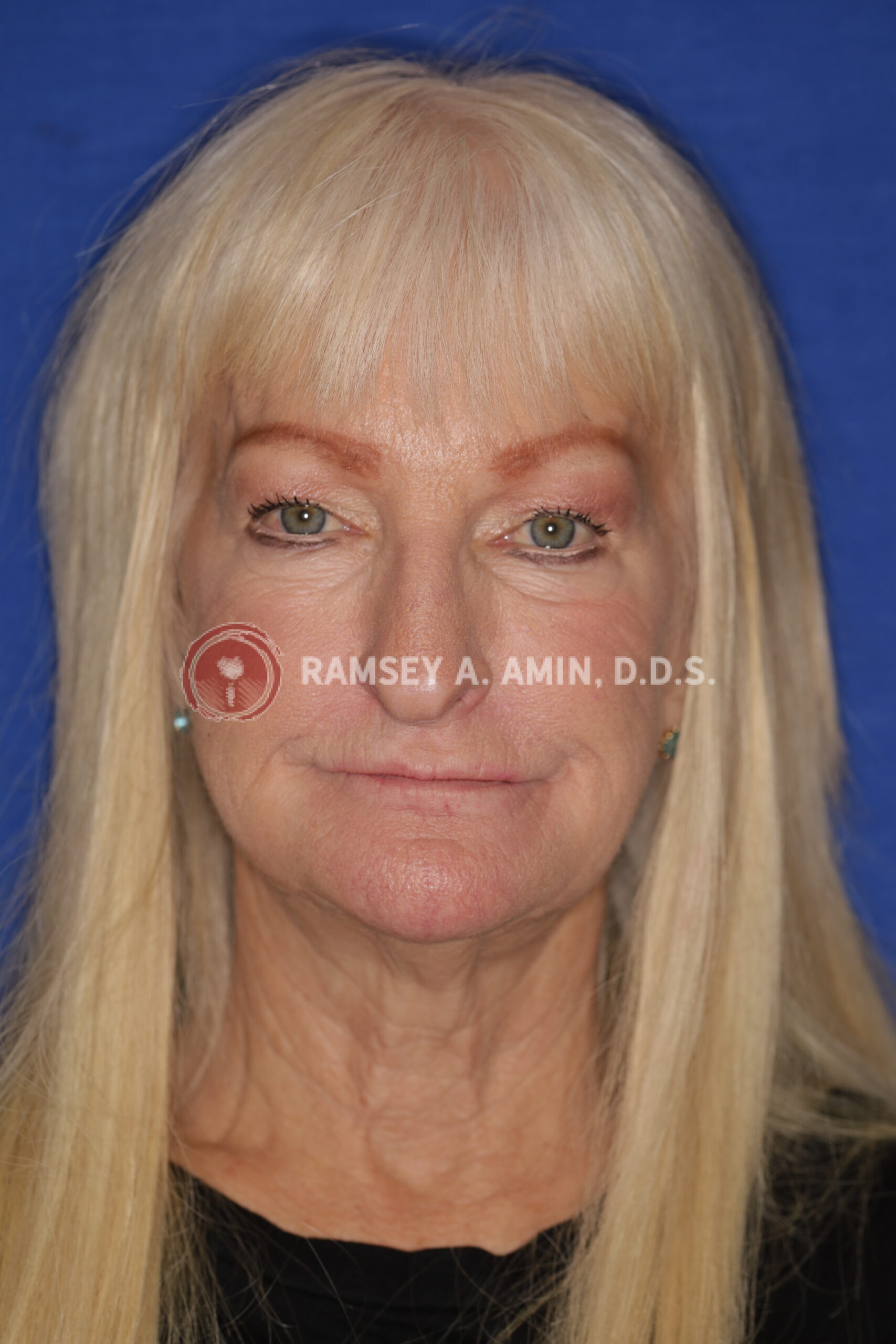
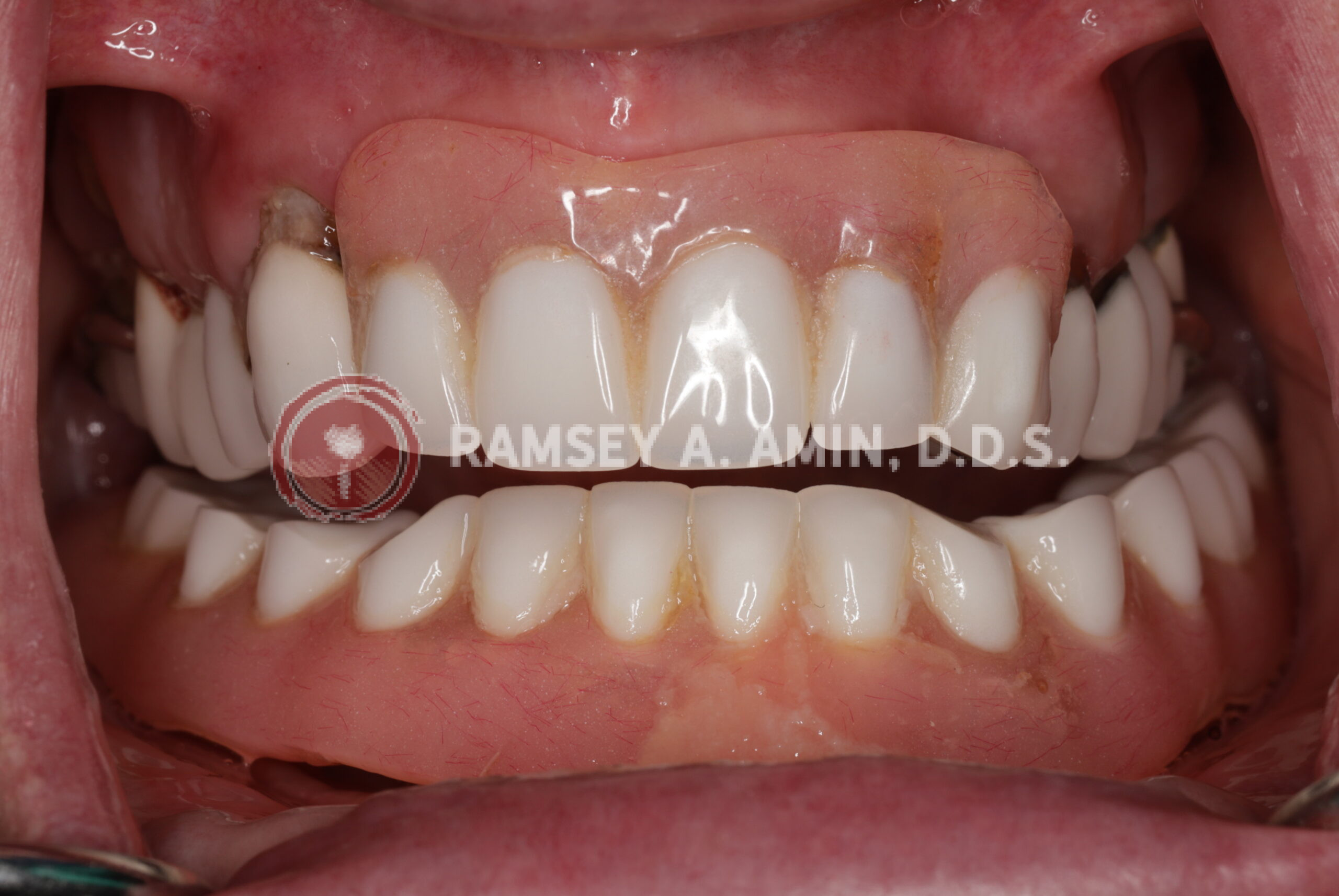
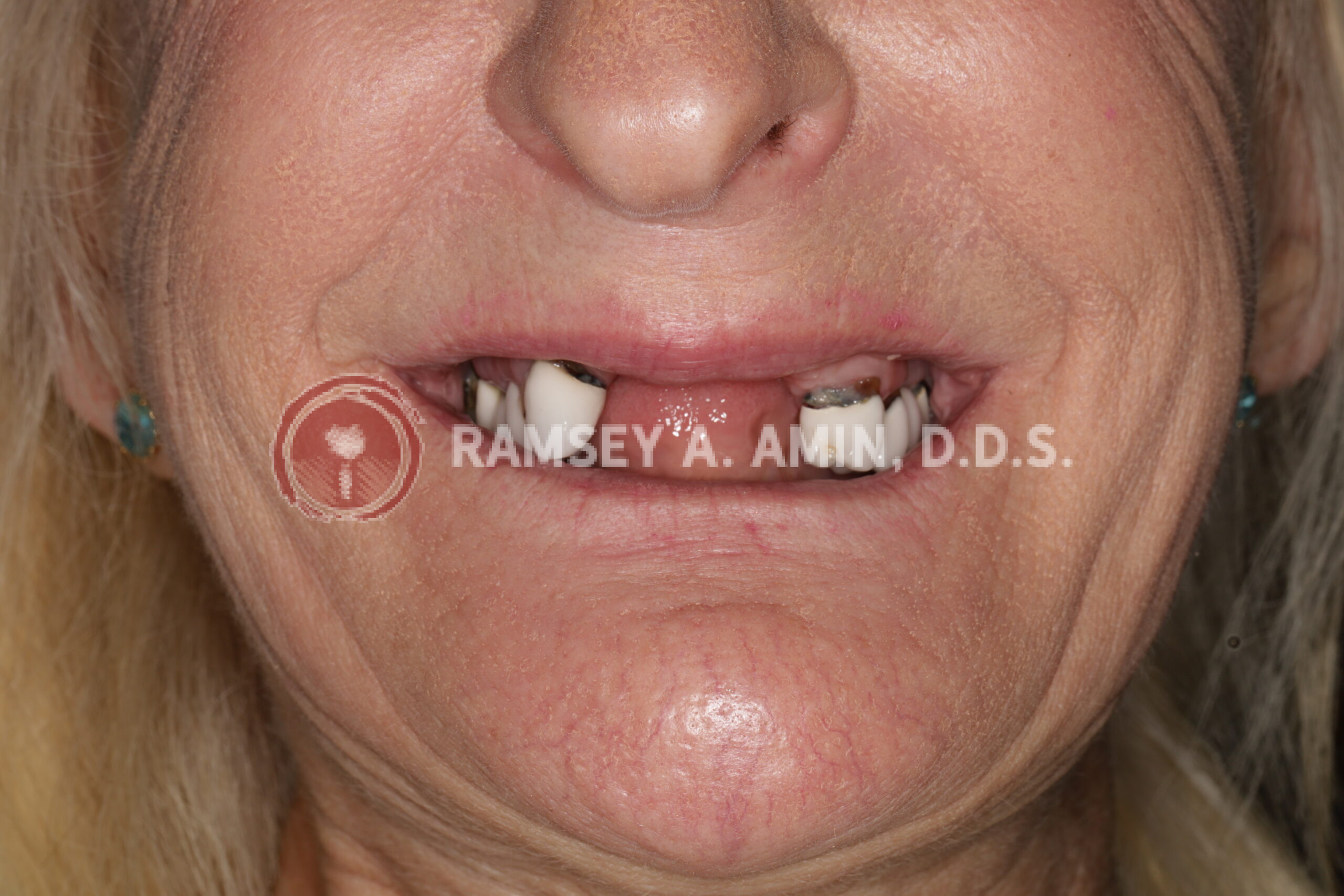
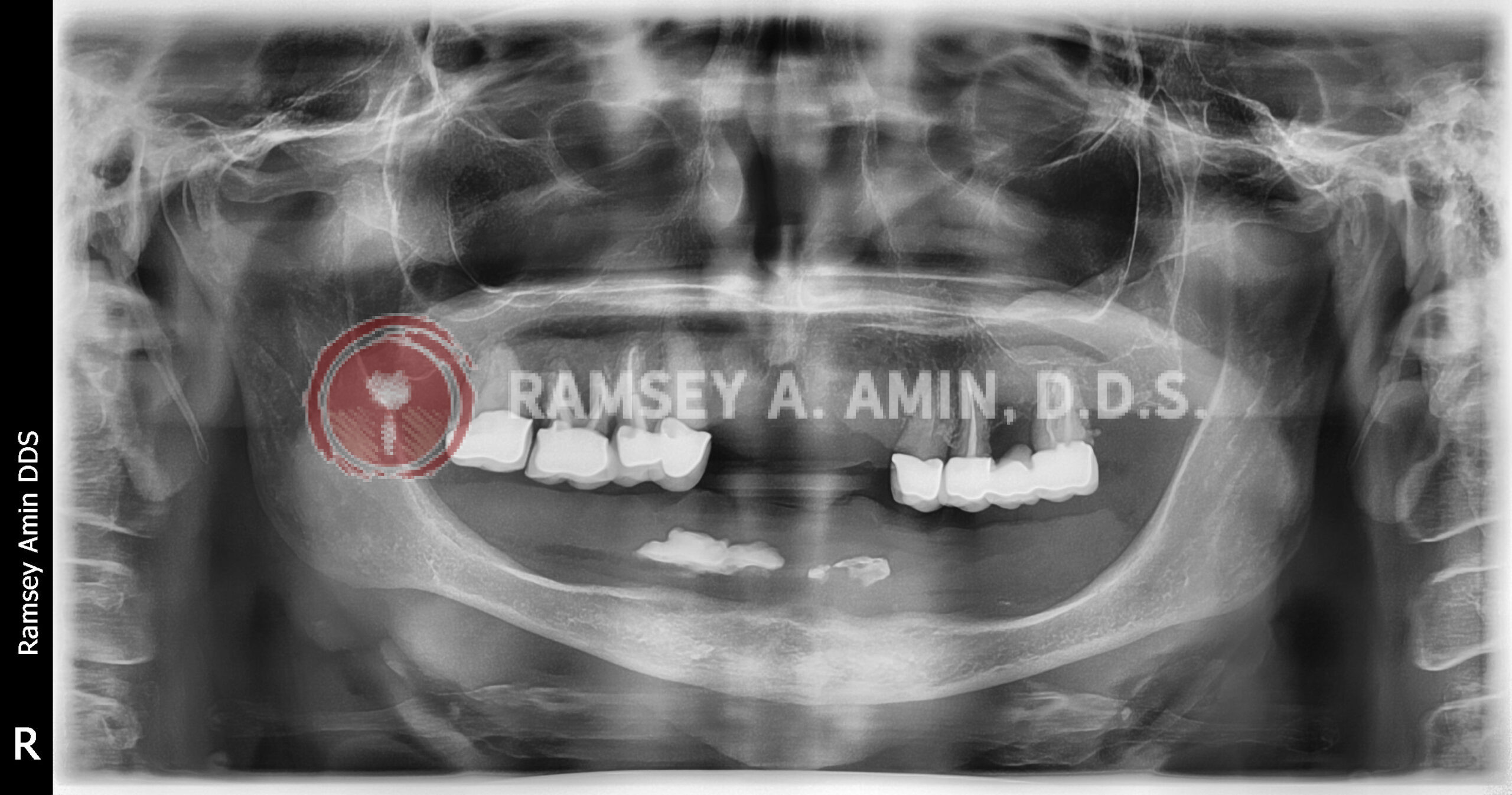
This severe bone resorption created a cascade of facial changes. Her facial height had collapsed—a condition dentists call a loss of vertical dimension of occlusion—making her face appear shorter and her lips sunken. An underbite had developed, and with no real gum tissue or cheek pouch left on the bottom, the floor of her mouth had risen, spilling over the ridge where her teeth once stood.


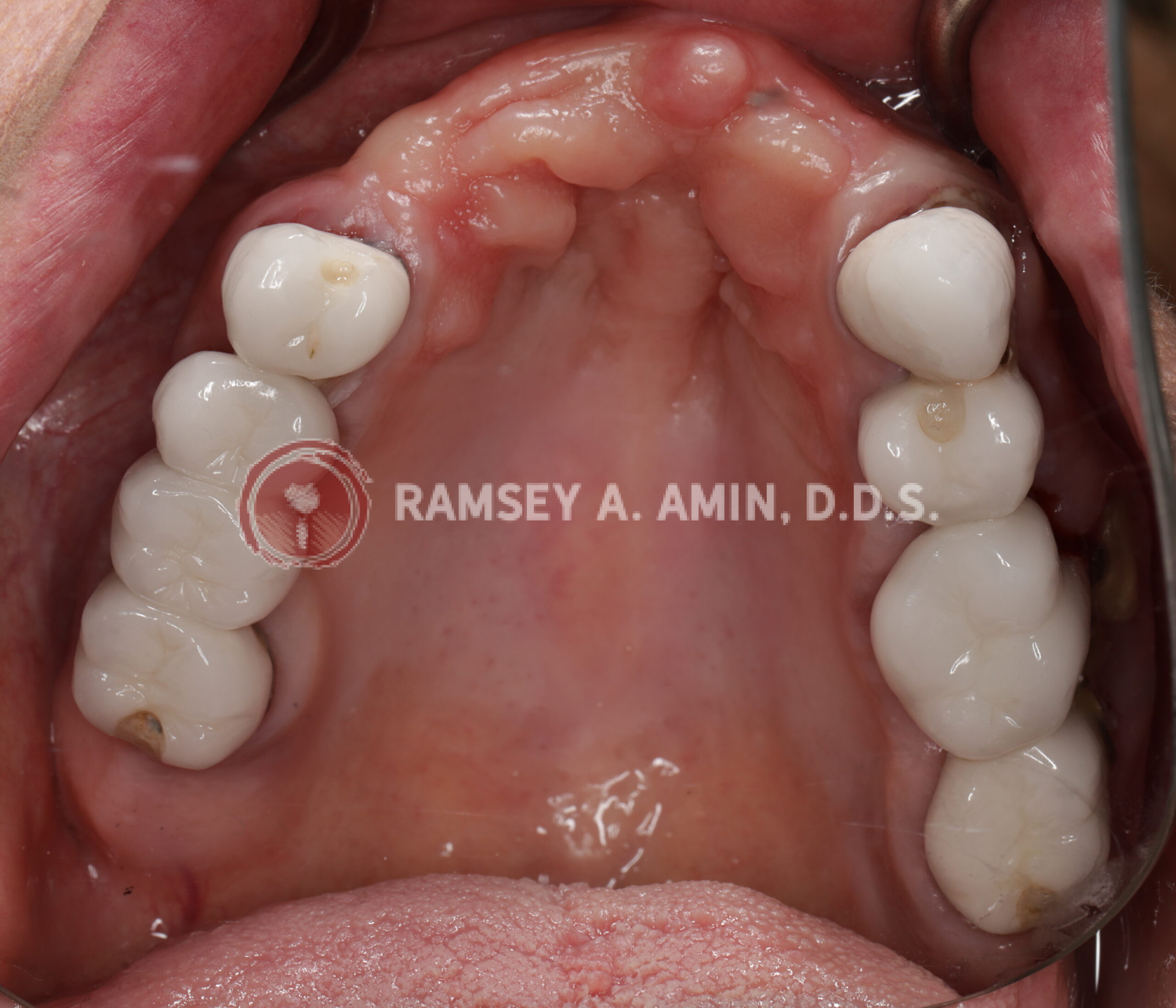
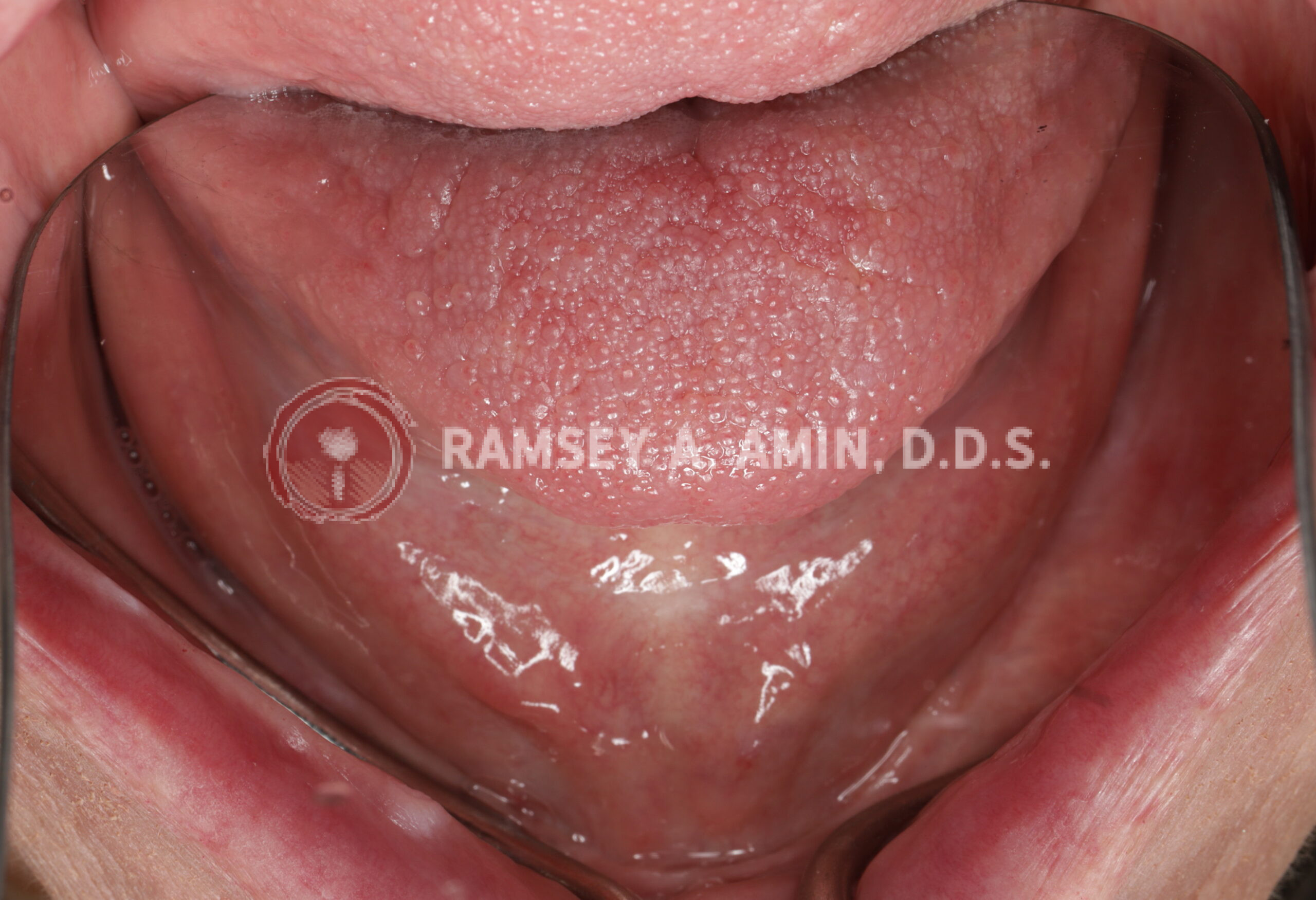
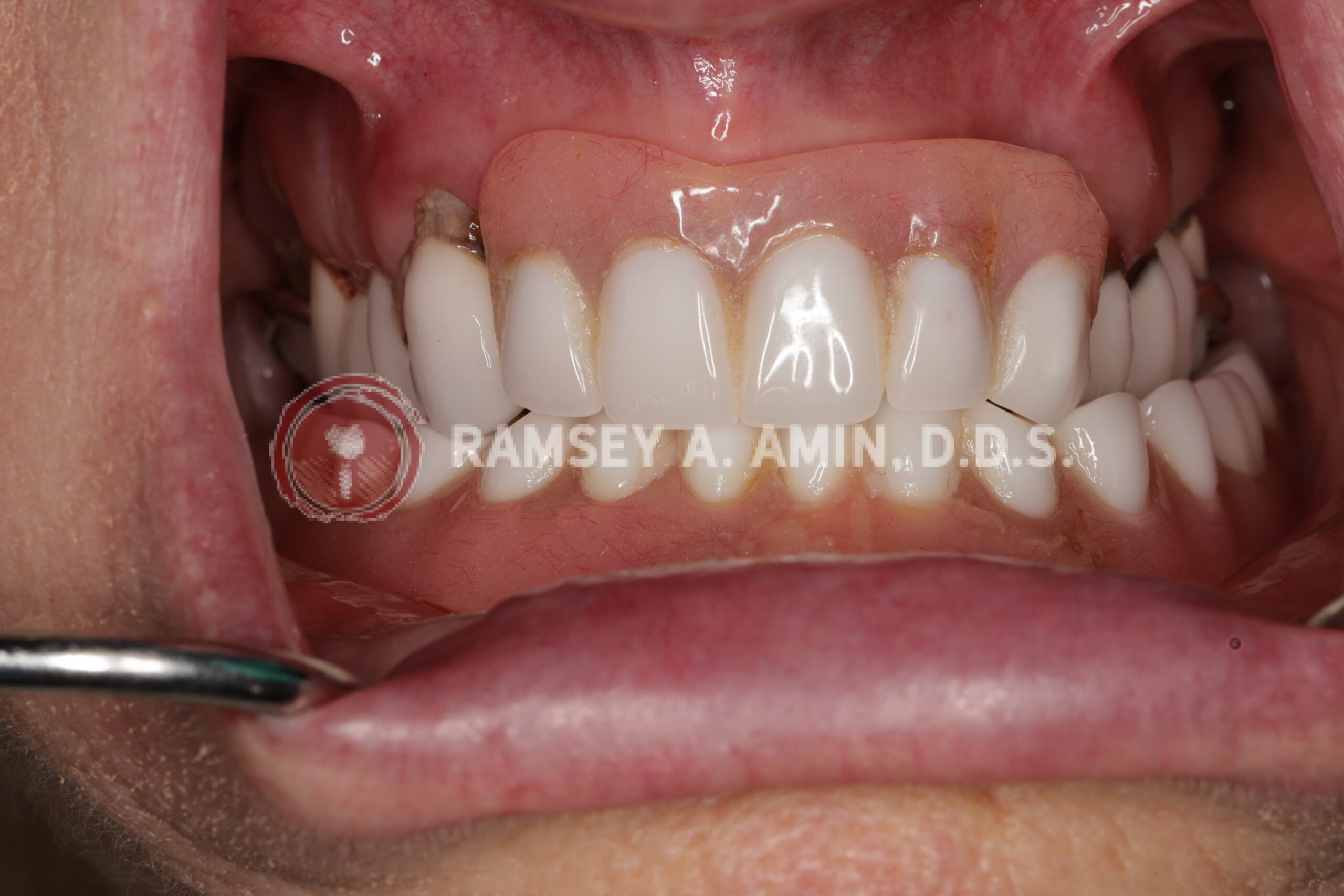
For most dental practices, including large implant centers, Cindy’s case would have ended with a familiar, disheartening verdict: “Nothing can be done. You have to wear a denture forever.” But that wasn’t true. It was just that the most common solution, the All-on-4, was not an option.
The Anatomy of an “Impossible” Case
To understand why Cindy’s situation was so precarious, one must look at the state of her lower jaw, or mandible. After years of atrophy, the bone had become so thin that attempting to place standard dental implants—the screw-like posts that anchor replacement teeth—would have been catastrophic.
Drilling into a lower mandible this fragile carries an immense risk of jaw fracture…YIKES! 😢
A broken jaw is not a simple fix; it’s an emergency requiring hospitalization, complex surgeries, and potentially bone grafts harvested from the hip. It is a dangerous and painful ordeal.
For patients like Cindy, the very treatment meant to restore their quality of life could irrevocably damage it. This is why they are so often turned away.
Reviving a Classic: The Modern Subperiosteal Implant
The solution to Cindy’s dilemma lay in reviving and modernizing a classic technique: the custom subperiosteal implant.
Unlike traditional implants that are drilled into the bone, a subperiosteal implant is a custom-fabricated framework that sits directly on top of the jawbone, beneath the gum tissue (the periosteum). It acts as a foundational scaffold, with posts that emerge through the gums to support a fixed bridge of teeth.
This approach follows the original design principles of a pioneer in the field, Dr. Leonard Linkow, but has been radically upgraded with modern technology. Instead of being cast from molds, today’s subperiosteal implants are born from digital precision. I have lectured on this topic to my colleagues!
- Digital Design: The process begins with high-resolution computer scans of the patient’s jaw.
- Custom Fabrication: This digital blueprint is used to mill the implant from a single, solid block of medical-grade titanium.
This milling process—akin to how Michelangelo carved the statue of David from a single block of marble—results in a monolithic framework of exceptional strength and integrity. There are no seams, no welds, and no separate parts to fail. The design is everything, and its flawless execution is what makes it work. This is not 3D printed.
The Two-Part Reconstruction: A Staged Approach
Treating both an upper and lower jaw in a case this complex requires a strategic, phased approach. The first priority was to establish a stable, predictable foundation in the upper jaw.
Cindy’s upper bone was as soft as cake, but there was a path forward. Zygomatic implants—extra-long implants that anchor into the dense cheekbone (zygoma) instead of the soft upper jawbone—provided the necessary stability. By anchoring into this “stud behind the drywall,” we could bypass the compromised areas and build a secure base for her upper teeth. Once her upper arch was stabilized with a temporary bridge and she was happy with the aesthetics, we turned our focus to the lower jaw.
New scans were taken, and a new temporary denture was created to verify every measurement before the subperiosteal implant went into fabrication—a process that alone takes one to two months.


The surgery itself is a single visit. Using a tripod design with three incisions, the custom framework is carefully placed until it nests perfectly onto the bone. The fit is so precise, like one cup stacked perfectly inside another, that it creates an intimate hug on the bone.
A few small screws provide initial fixation, but the implant’s stability comes from this “intimacy of fit.” The temporary teeth are attached on the very same day!

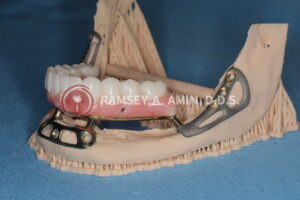


For Cindy, the change was immediate. Even while restricted to a soft diet for a few months, nothing moved. She had a complete, beautiful smile that looked and felt secure. After a healing period and X-rays to confirm everything was stable, the final zirconia bridge was fabricated and permanently attached.
A Critical Distinction: Upper vs. Lower Jaw
While the custom subperiosteal implant is a life-changing and predictable solution for the lower jaw, its use on the upper jaw is a different story—and one that requires a serious warning.
As of 2026, I strongly advise against custom subperiosteal implants for the upper jaw in most situations.
The bone of the maxilla (upper jaw) is much more porous and less dense than the mandible. Under the force of biting, these upper frameworks can sink into the bone, creating irreparable holes in the sinuses and nasal cavity. The failures we have seen are horrific, often occurring within six months and leaving patients far worse off than they started.
These implants may have a place in rare cancer reconstructions, but for routine tooth replacement, zygomatic implants and other grafting options are vastly safer and more predictable. Be wary of claims you see on social media promoting upper subperiosteal implants as an easy alternative; what works for a short time is not the same as what is safe for the long haul.


Life After Reconstruction
Cindy’s transformation is a testament to what is possible when we push the boundaries of dentistry. She now has a beautiful, functional smile built on a foundation of expert lab work and surgical precision. It is a high-level solution that very few dental laboratories and clinicians have the experience to provide.


For those who have been told they have no options, know that it may not be true. Finding a dental implants specialist who can perform these advanced procedures is difficult, and the custom nature of the work makes it more costly and time-intensive than a standard All-on-4. But it can be done.
The journey doesn’t end with surgery. Maintenance is critical. Patients must be diligent with cleaning, using tools like a Waterpik and floss to clean around the posts where they emerge from the gums. Regular checkups and X-rays are essential to monitor the implant and ensure the bite forces remain balanced. It is not a “fit and forget” solution, but a lifelong commitment to oral health.
For older patients who lost their lower teeth long ago and have been left with little to no bone, this technology represents more than just new teeth. It is the restoration of function, confidence, and a piece of themselves they thought was lost forever.
have missing teeth on both the right and left sides of my mouth. I can eat and do my daily activities without pain, but I feel shy when talking to people because I don’t like opening my mouth.
I would like to know if dental implants are a good option for me. Am I a suitable candidate? What tests or scans would I need before deciding?
This should help you understand what is needed
https://burbankdentalimplants.com/your-first-visit/
You probably need full arch implants. Without back teeth you will lose your front ones.