
You may have heard about Botox® for teeth grinding or jaw clenching. But why would Botox® be important while having full mouth dental implants?
In order for full mouth, immediate teeth within 24 hours to work, the implants cannot be subjected to high biting forces. Botox®, (Xeomin® and Dysport®) temporarily decreases the strength of the biting muscles.
But I don’t want Botox®! Isn’t that only for cosmetic procedures? Read on!
Can I get dental implants if I clench or grind my teeth?
Well, yes you can….but let’s learn why Botox® is important for dental implants and bruxism (teeth grinding).
I have patients who lost teeth from gum disease, smoking, root canals and/or cavities (Grinding and clenching also causes tooth loss from fracture of teeth).
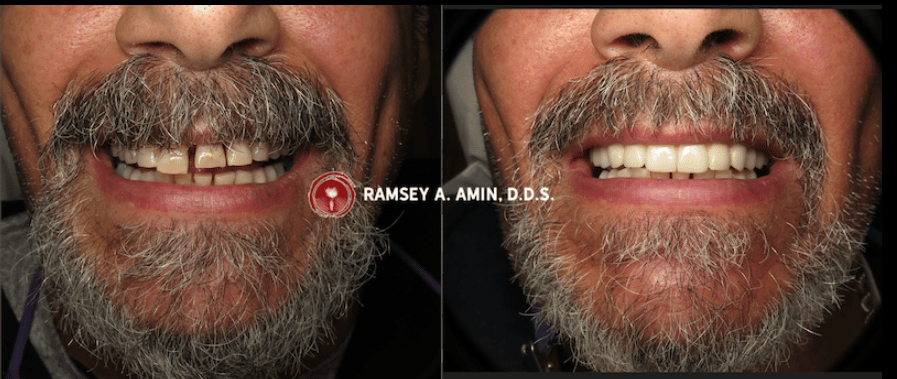
When you get full mouth implants and you get teeth right away, you are restricted to a very soft diet for a few months. But what happens if you grind or clench your teeth at night on the temporary prototype teeth while they are trying to ‘take?’
Grinding on the temporary prototype will overload the implants causing them not to work and you will have failure!
Botox® (Xeomin®) gets placed BEFORE the implants are surgically placed. It takes about a week for the Botox® to become active. When it does become active, it is like an insurance plan for the first 3 or 4 months while the implants are integrating.
I typically place Botox® into the masseter muscles. The masseters are the muscles in your cheeks that make your jaw close, grind and clench (that’s why Botox for teeth grinding or clenching is recommended in some cases).

Masseter Muscles
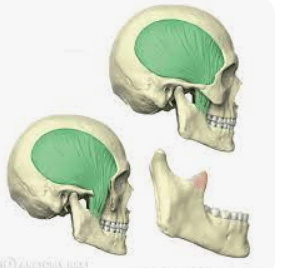
There are also muscles that make your mouth close on the side of your head — called the temporalis muscles.
Getting Botox® and dental implants at my office
Most people need 10-35 units of Botox®, (Xeomin® and Dysport®) per side in order to have an effective dose. So 20 to 70 units total is average.
In my office we use a high tech device that can measure your bite. It can tell if you have a high chance of having problems with the implants. This is a very unique device made outside of the United States.
Basically if you bite more than about 600 Newtons, I would suggest Botox® for the initial healing duration of the implants. The last thing you want after spending all this time and money is to have a failure!
Furthermore, some people have such strong bites that they would benefit from doing Botox® for their implants on a routine basis every 3-6 months for many years. Implants are not indestructible or permanent even though they are made of titanium.
Just like anything else, if they are subject to a lot of force over time, the titanium will break and crack. Also you can break screws and even have a catastrophic zirconia or acrylic bridge fracture! OOF!

As I have said before, dental implants are not permanent so we need to do everything possible for your unique situation to make them last and make them work! This starts with an expert, detailed work up!
Some people are apprehensive of having Botox® because they think they are going to look different.
Botox® (Xeomin®) for the masseter and temporalis muscles does not change facial appearance at all.
All of the fun, nice cosmetic things that people do with Botox® are typically above the nose, but most everything we do with Botox® is in the cheeks.
Unfortunately (or fortunately) you will not look any different and no wrinkles will be removed. The purpose of this is strictly to reduce bite force. It is therapeutic, not cosmetic!
How much Botox® do I need?
Most patients on average have 50 units of Botox®. About 25 units are placed into each masseter. Most people only need one-time treatment, but if you have a history of grinding and clenching you may need Botox® more routinely.
Some people who have square faces from muscle bulk ‘may’ see some thinning of the cheeks over many treatments. One treatment will not make changes. Those who have changes always love it because it makes the face look more slim.
The other day I had a patient register 1132 N of bite force! That is a scary amount of bite force! I can guarantee you without doing Botox® preoperatively that his implants would have failed because he basically clenches all night.
Making a night guard does not really decrease the force because all it does is redirect the force to a better position. I am a big advocate of a night guard, but again, it does not take away any force.
How will I feel after Botox® for teeth grinding or implants?
Many people do not feel anything at all, but those who grind their teeth really heavily notice a massive relaxation of the jaw muscles.
If you have a hard time keeping your mouth open for a dental visit, then you probably clench very hard and your muscles are so tired from working overnight that they cannot even get through a short, regular dental procedure.
The Botox® injections are truly almost painless. It is a tiny 30-gauge needle put into 2-4 locations. The whole appointment takes 10 minutes maximum.
The risks are low. One of the nice things is, if you were to have some sort of a side effect, it would wear off in just a few months. The downside of Botox® is that it is not permanent.
There is a slight chance that your lip may not lift as high when you smile on one side if you have a special location of the nerve that makes your lip corner lift up. This is very uncommon and probably only accounts for 1% of patients.
Can I get dental implants if I get Botox®?
Bottom line, Botox® and dental implants are very safe. Botox makes full mouth dental implant procedures more predictable by greatly reducing the amount of pressure you can put on your teeth even though you might only be eating soft foods.
This is just another special thing that I do to increase success and make sure you get a good result!
The last thing you want to do is compromise such a big all-on-4 or all-on-6 procedure by not doing Botox® when indicated.
Be sure to discuss a past history of teeth grinding with your dental implant specialist. Sometimes we will not know whether or not you grind your teeth (or if you’ll need Botox® for teeth grinding) until you get the prototype immediate teeth in place.
If you’re interested in scheduling an appointment for dental implants, call my office to schedule your appointment.