
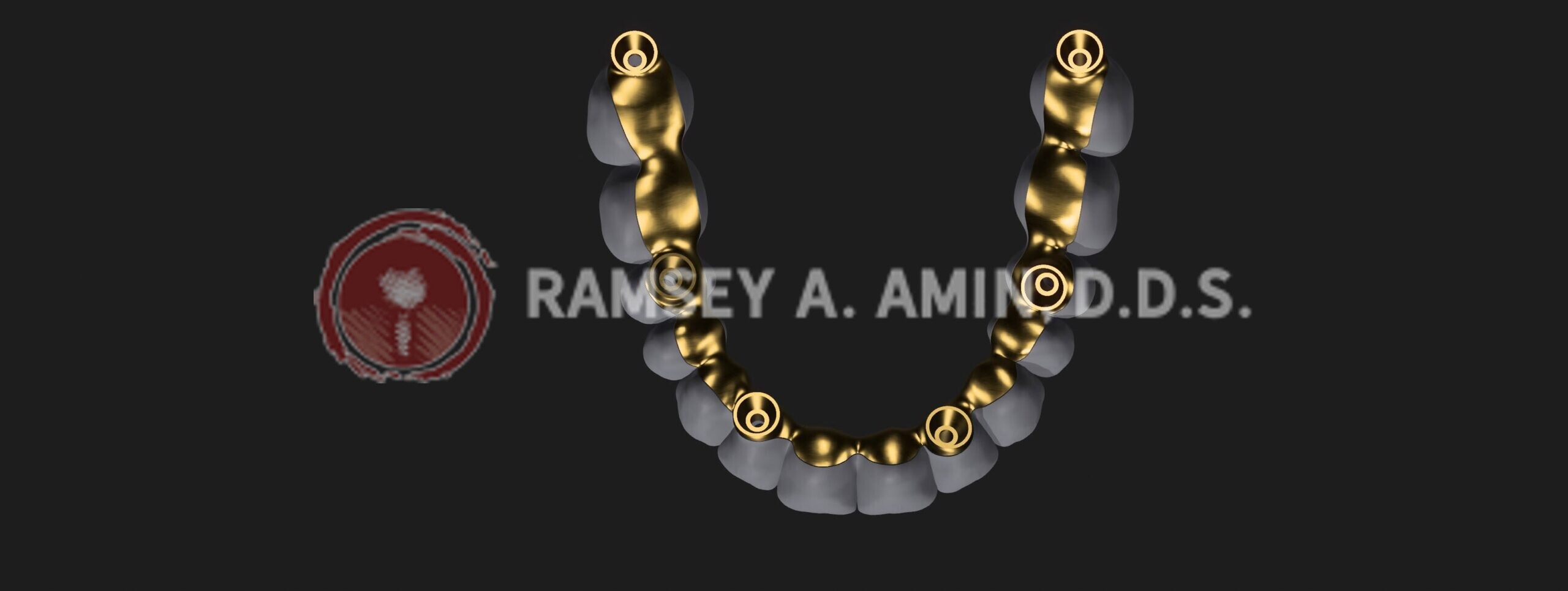
When people hear “All-on-4 dental implants,” they often picture a beautiful, solid zirconia bridge. And that is often exactly what we use. But in some cases, the zirconia teeth need an internal titanium framework—commonly called a titanium bar—to add strength, support, and long-term stability.
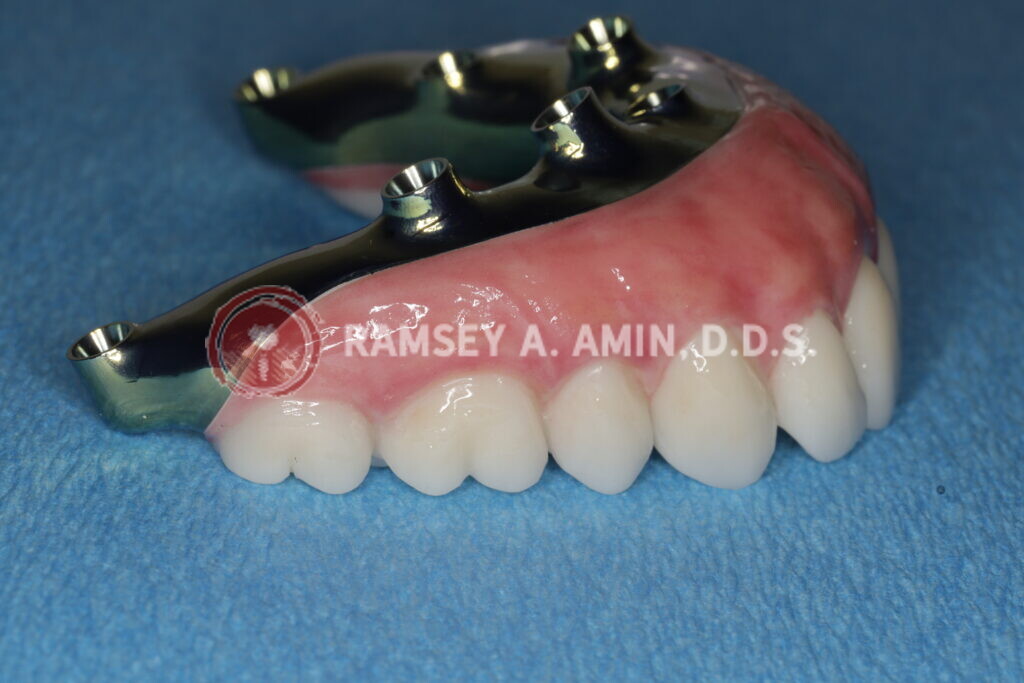
Think of it like the framing inside a house. You don’t see the studs once the drywall is installed, but they do a lot of important work behind the scenes. A titanium bar can work the same way inside a full-arch implant bridge.
What Is a Titanium Bar?
A titanium bar is a custom-milled metal framework that fits precisely onto your dental implants. The zirconia portion of the final bridge is then attached to that framework.

In many cases, the titanium bar is almost entirely hidden. From the outside, you still see the natural-looking zirconia teeth and gums. But underneath, there is a strong titanium structure helping to reinforce the bridge.
This is not something that is routinely necessary for every All-on-4 case. In my practice, though, roughly 25% of full-mouth implant cases need this additional support for one reason or another.
The decision depends on factors such as:
- The size and shape of the jaw
- The number and position of the implants
- Whether there is a cantilever
- Your bite forces
- The amount of available bone
- Whether implants need to extend farther back in the upper jaw for pterygoid implants.
- The design of the final full-mouth implant bridge
- FP1 (no pink) vs FP3
Why Use Titanium in an All-on-4 Bridge?
Titanium has been used in implant dentistry for decades because it is strong, lightweight, highly biocompatible, and well tolerated by the body.
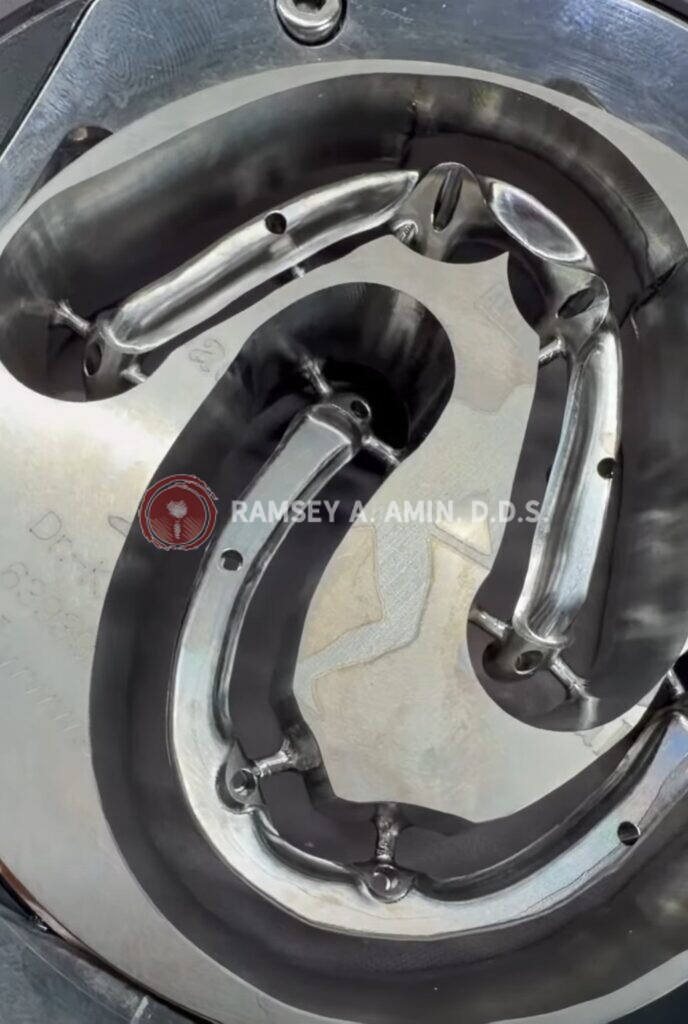
For an All-on-4 or full-mouth dental implant bridge, titanium can provide a rigid internal framework that helps support the zirconia restoration. This can be especially helpful when the final bridge is large, long, or exposed to heavier biting forces.
The titanium bar is typically made from Grade 5 titanium. These are high-quality titanium alloys commonly used in medical and dental applications because of their strength and biocompatibility.
A titanium bar may be recommended when we need to reinforce the bridge in areas that would otherwise be under more stress.
Titanium Bars and Cantilevers
One of the most common reasons to use a titanium bar is to strengthen a cantilever.
A cantilever is an area of a full-arch bridge where there are teeth extending beyond the last implant. In simple terms, there may be back teeth where you chew, but no implant directly underneath that area.
This situation is common in lower All-on-4 cases. The back implants may need to stay in front of the mental nerves, which are important nerves in the lower jaw. We cannot simply place implants wherever we want if doing so risks nerve injury.
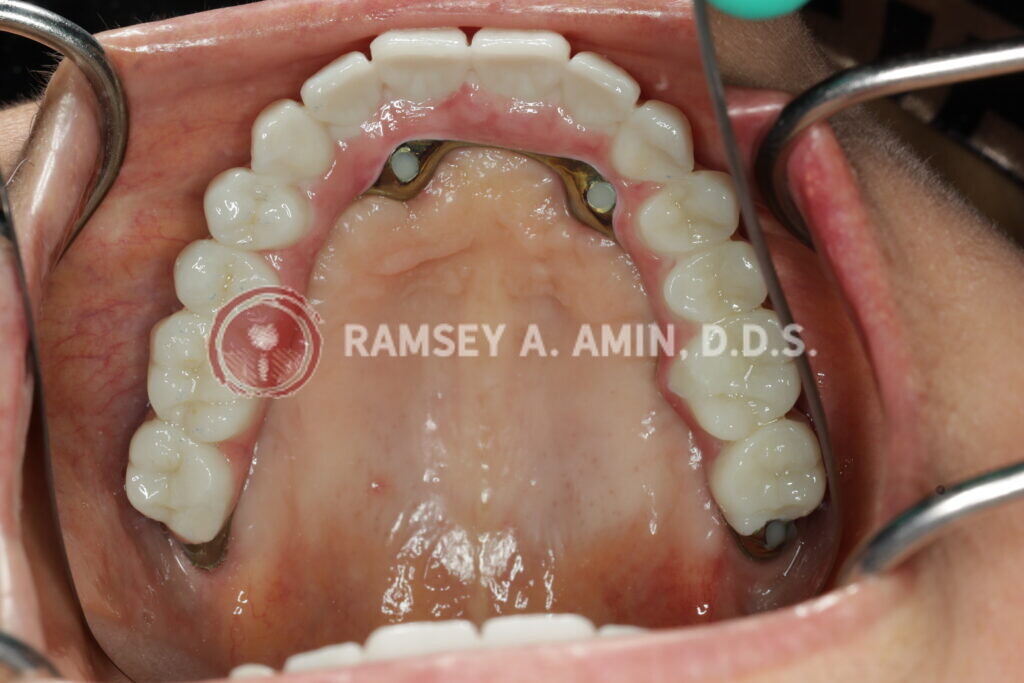
As a result, the final bridge may extend somewhat behind the rear implants to provide a functional set of chewing teeth. That extension needs to be carefully planned. A titanium bar can help reinforce that portion of the restoration and better distribute the forces created during chewing.
That does not mean every cantilever automatically requires a titanium bar. But it is one of the major design considerations that I evaluate during full-mouth implant treatment planning.
Tissue-Friendly Design Beneath the Bridge
Another important advantage of titanium is how it can be designed where the bridge contacts the gums.
The underside of an implant bridge—the part that faces and rests near the gum tissue—is called the intaglio surface. You do not see this area when you smile, but it is extremely important for hygiene, comfort, tissue health, and long-term maintenance.


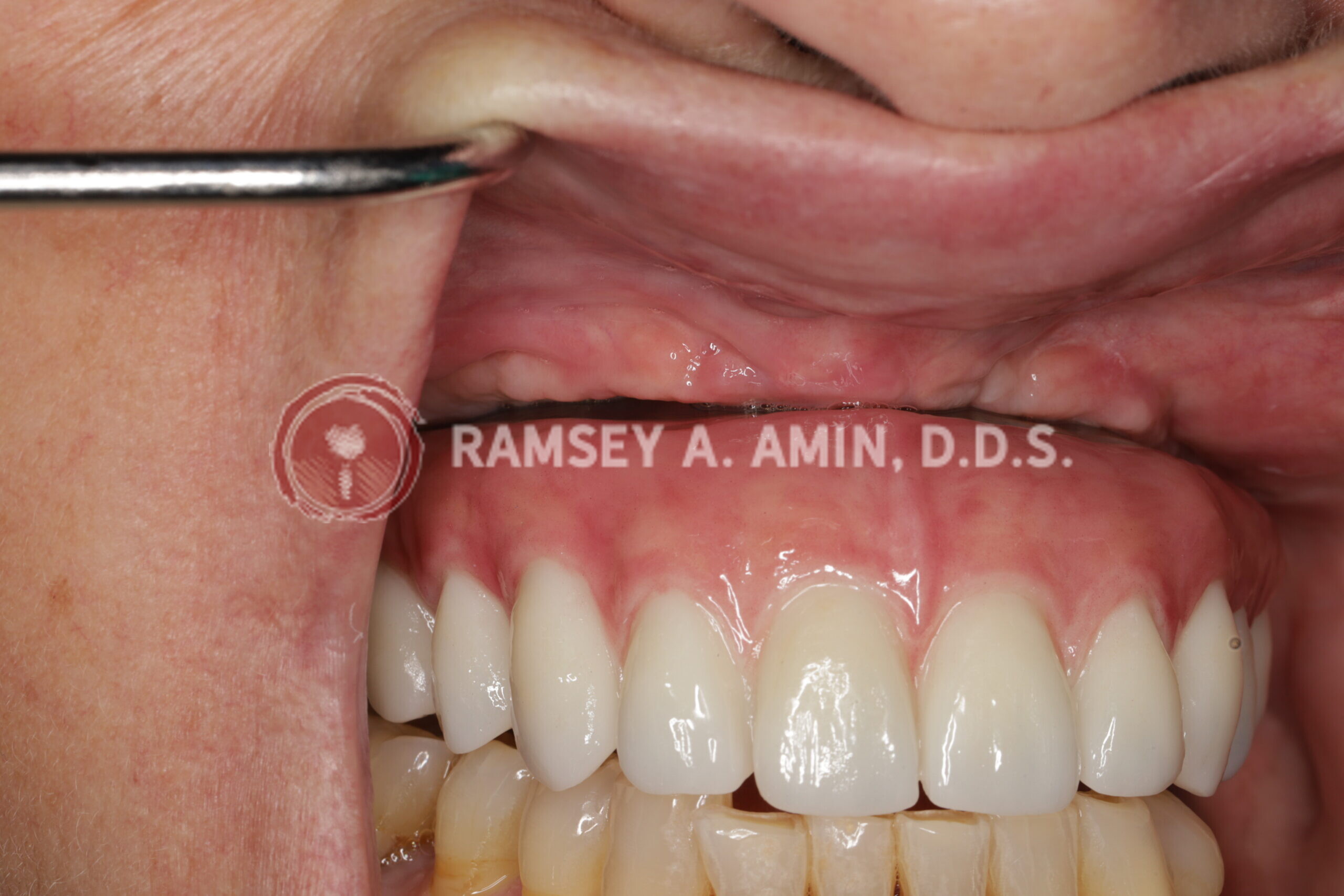
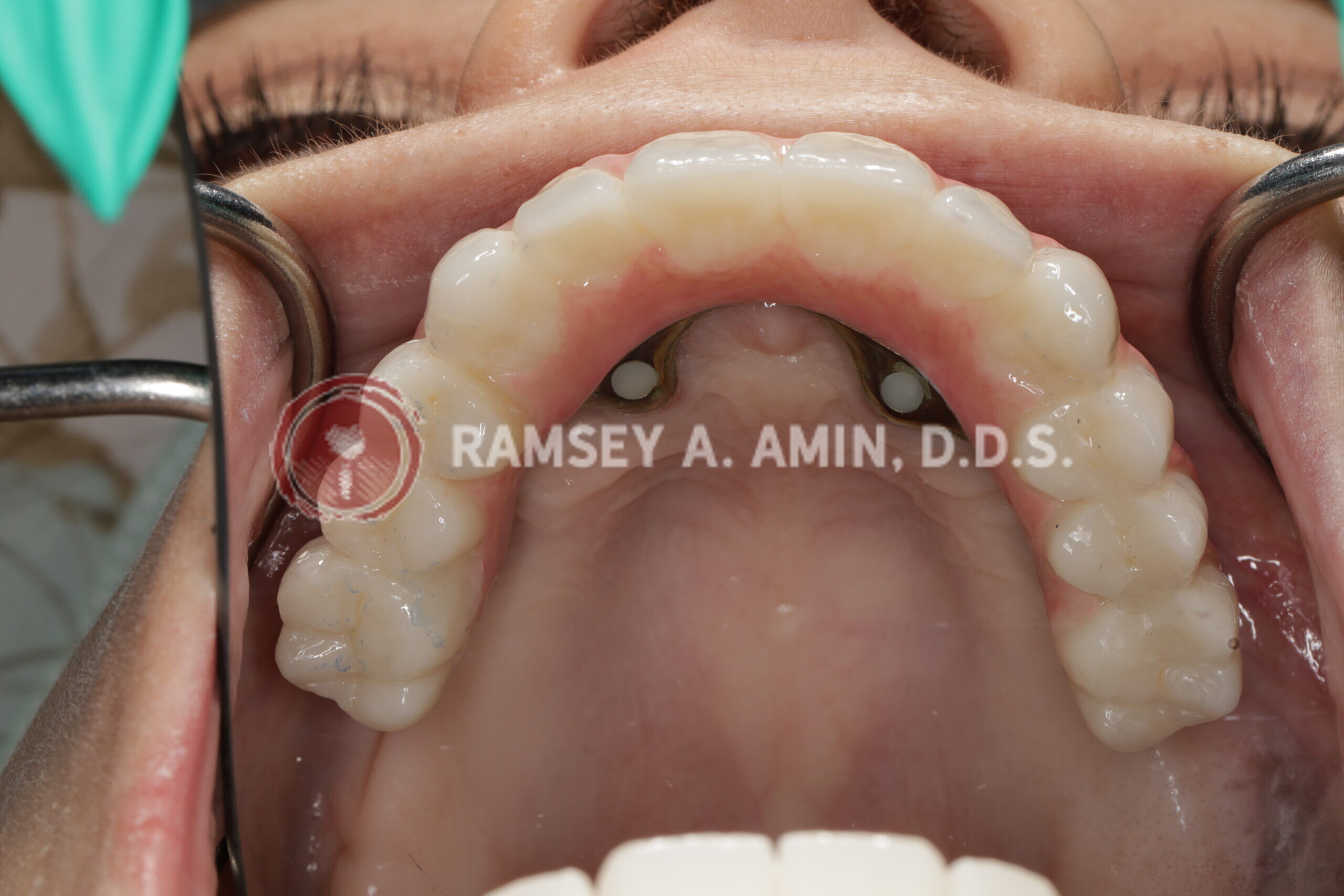
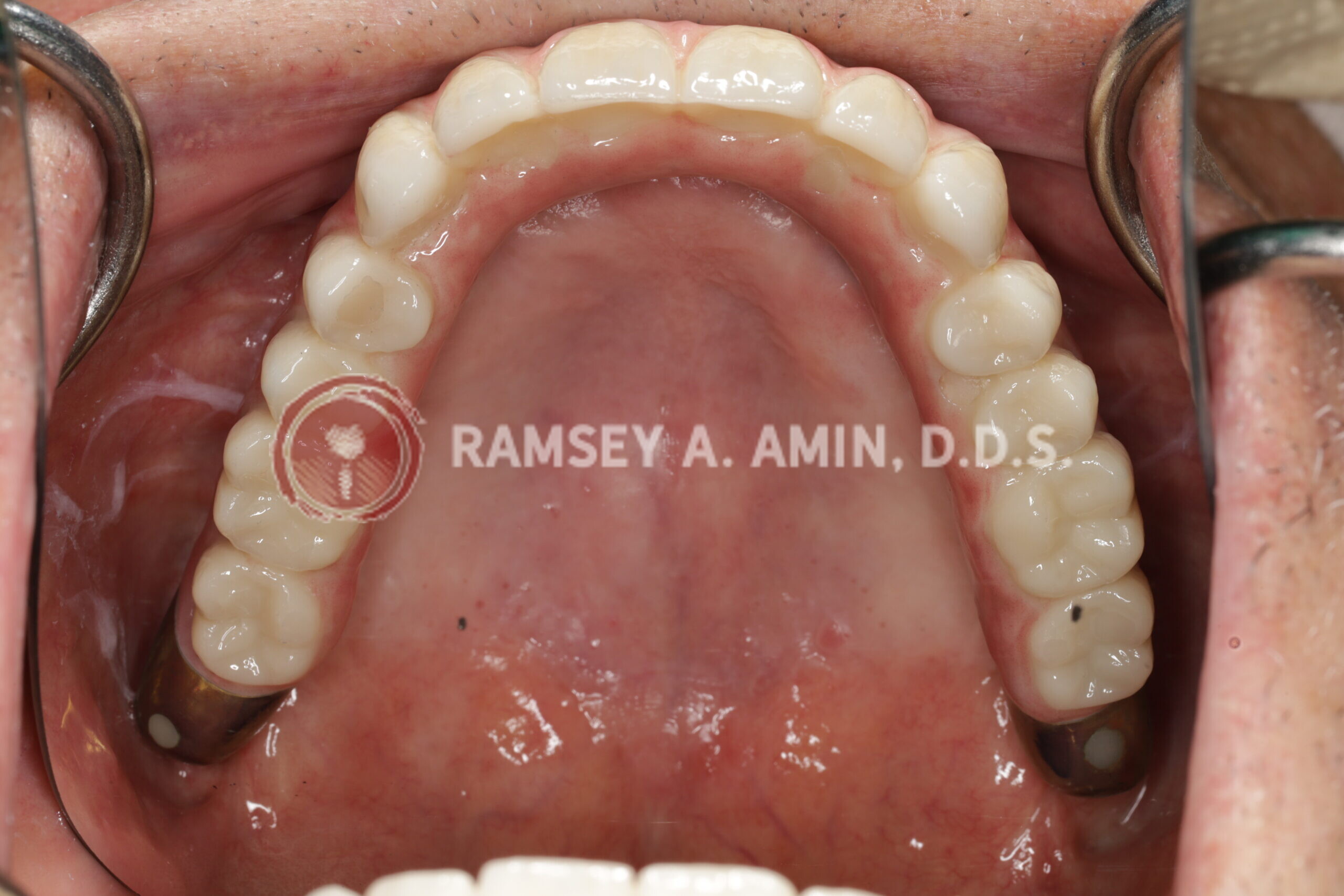
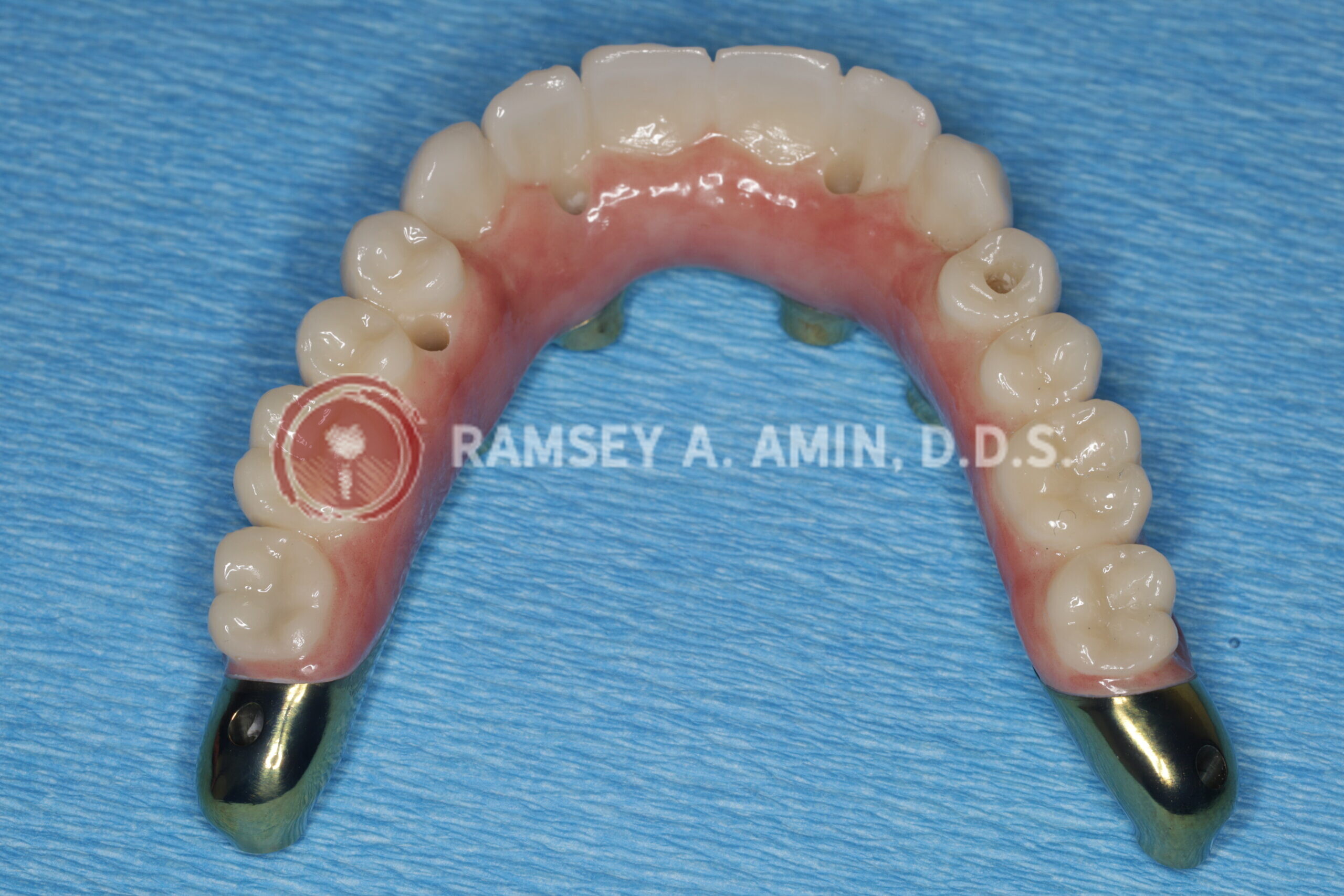
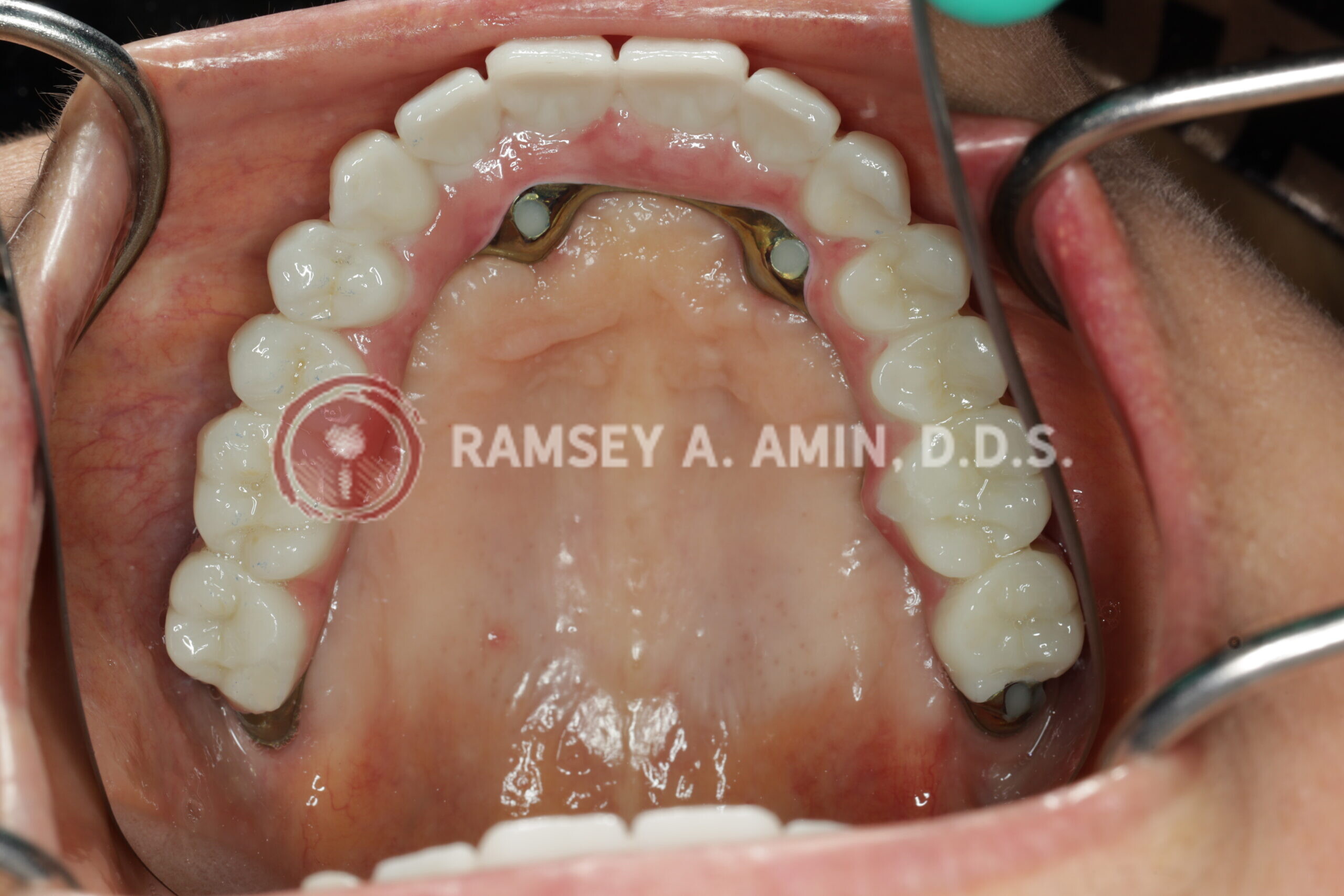
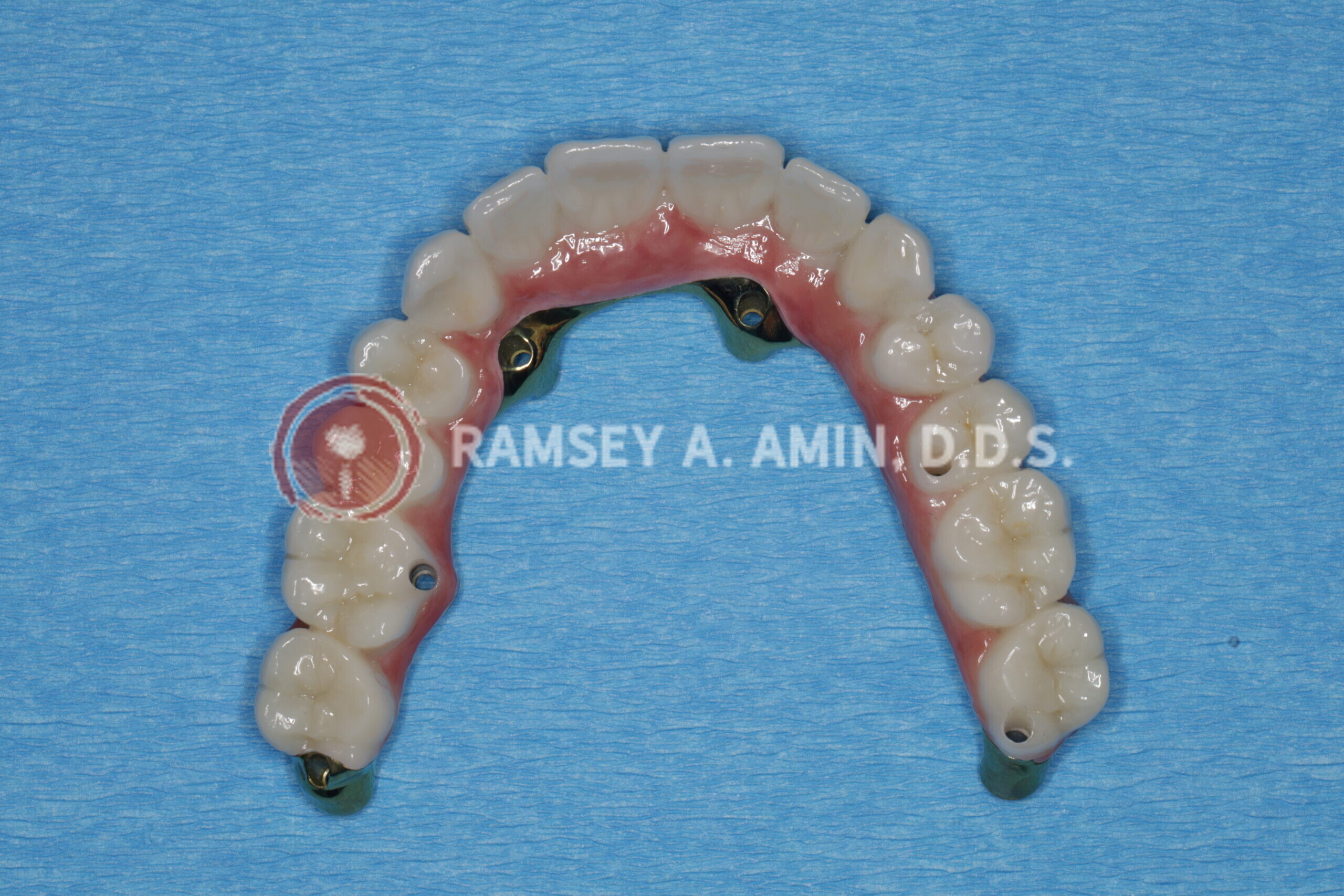
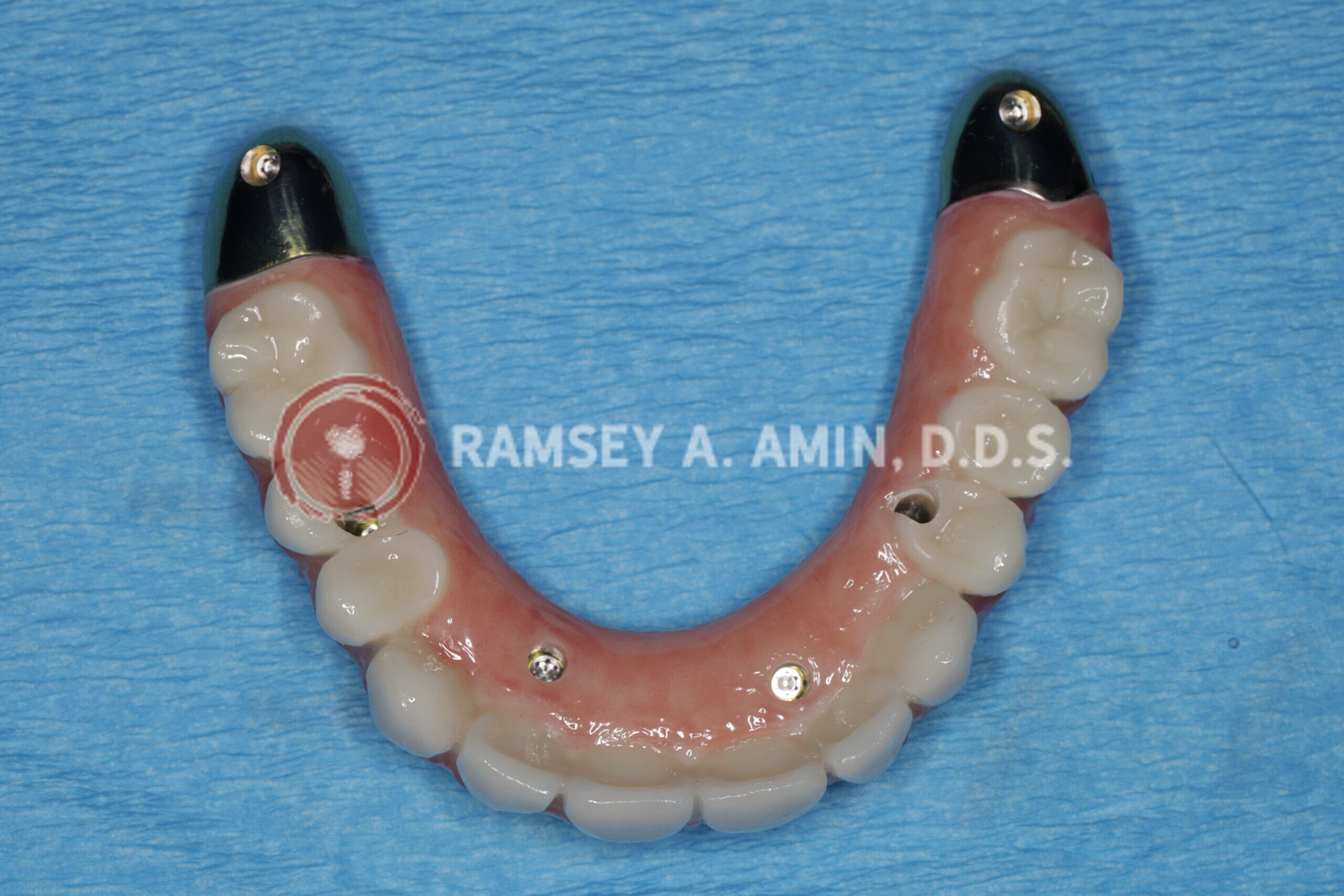
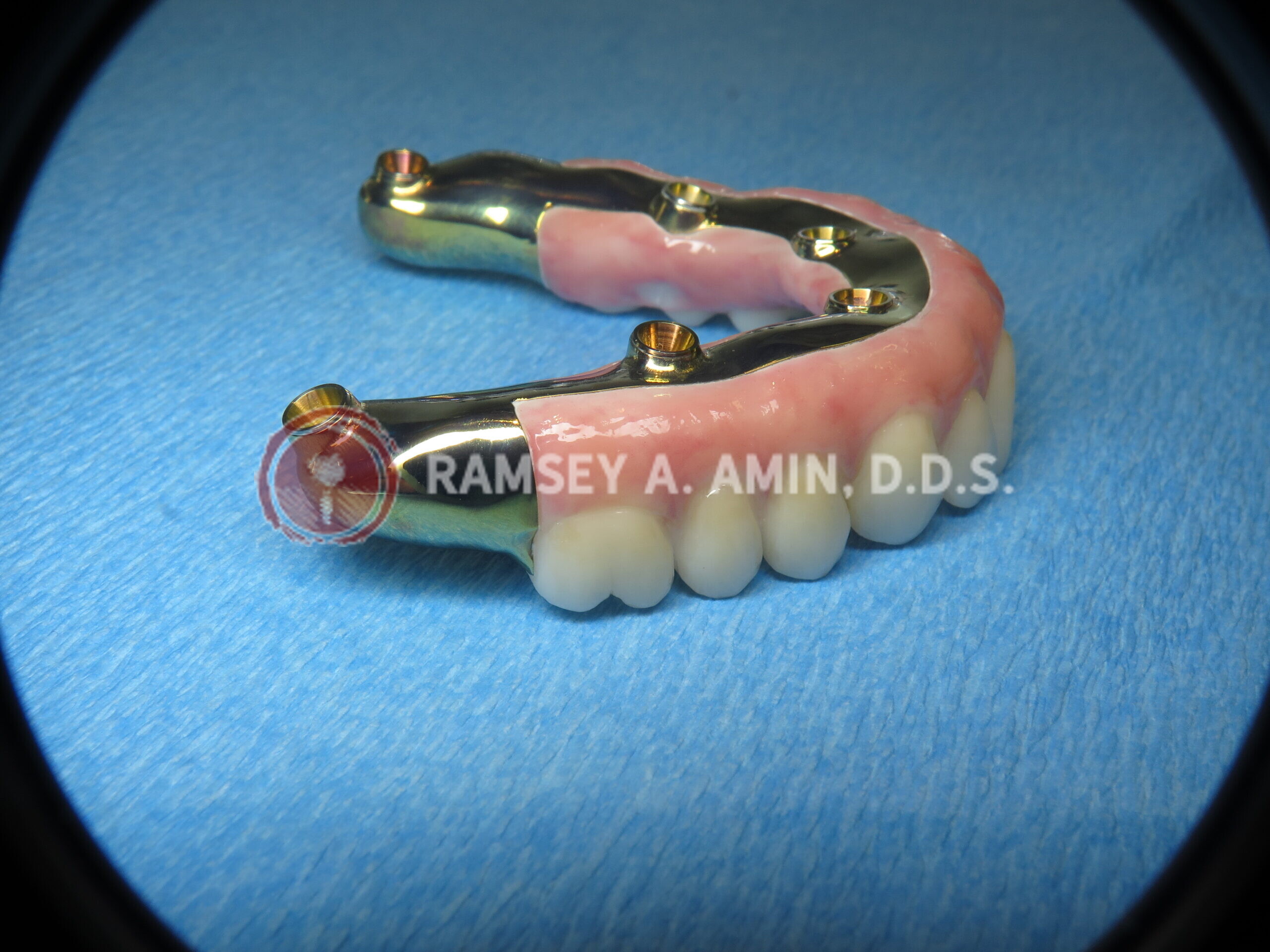
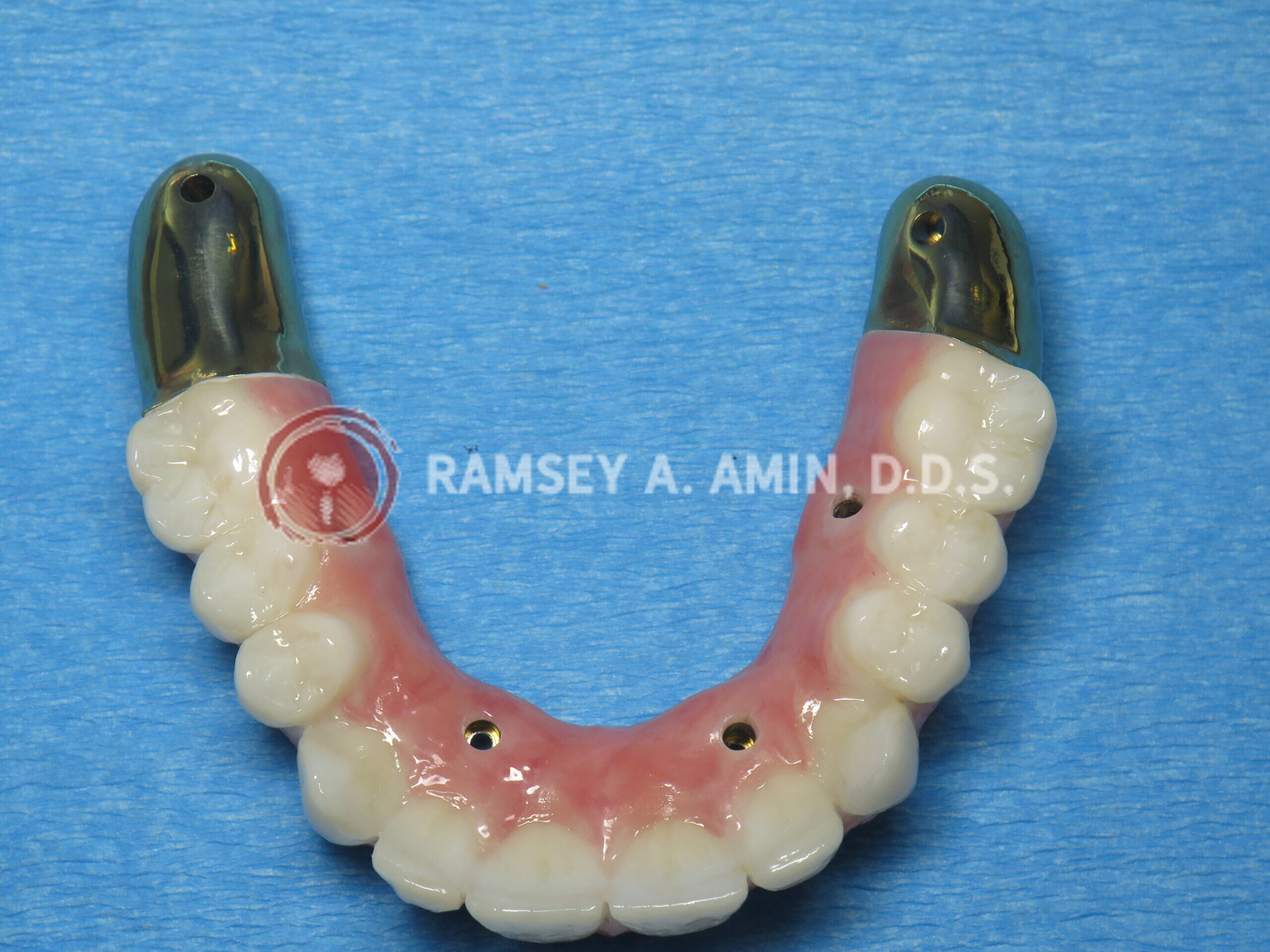
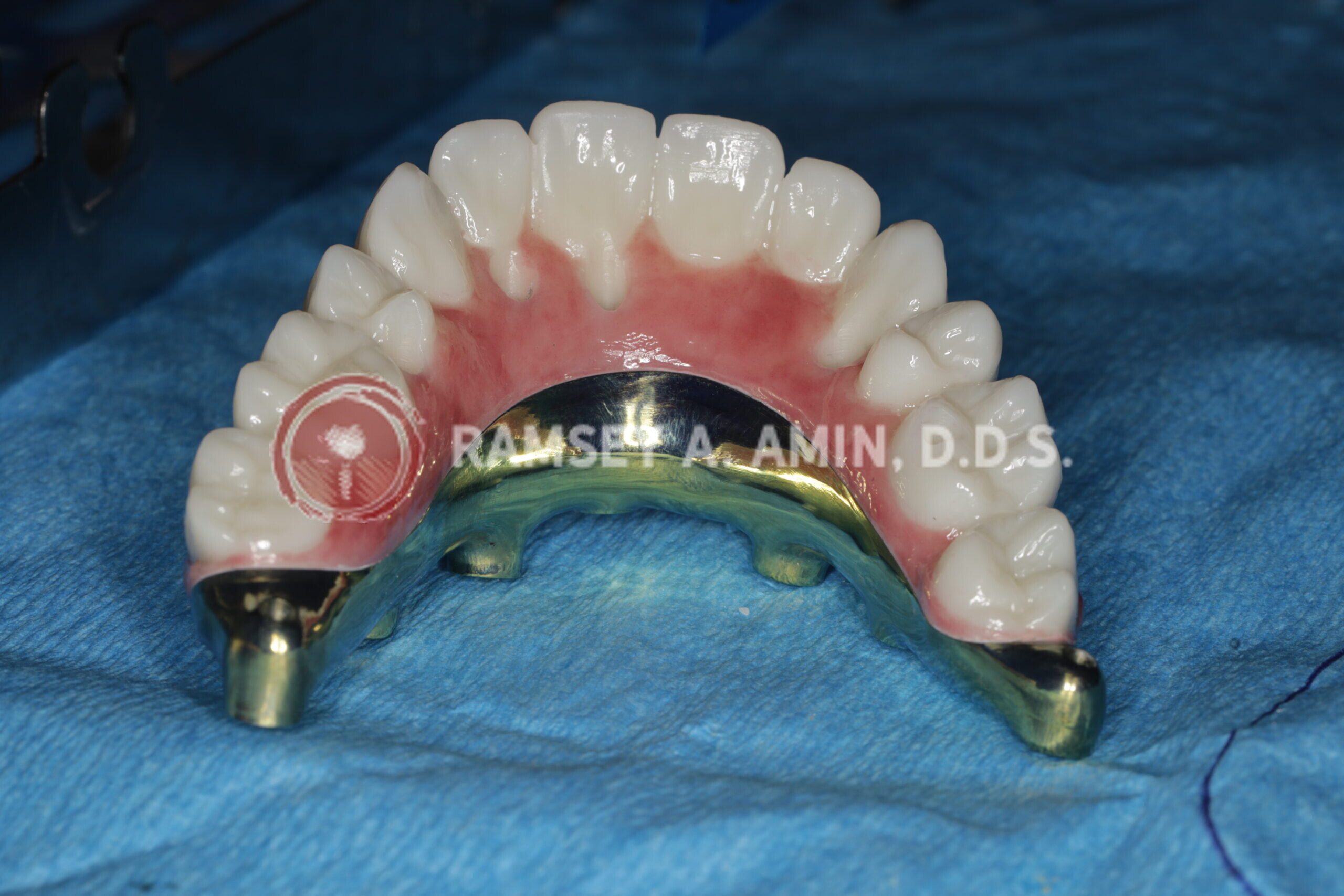
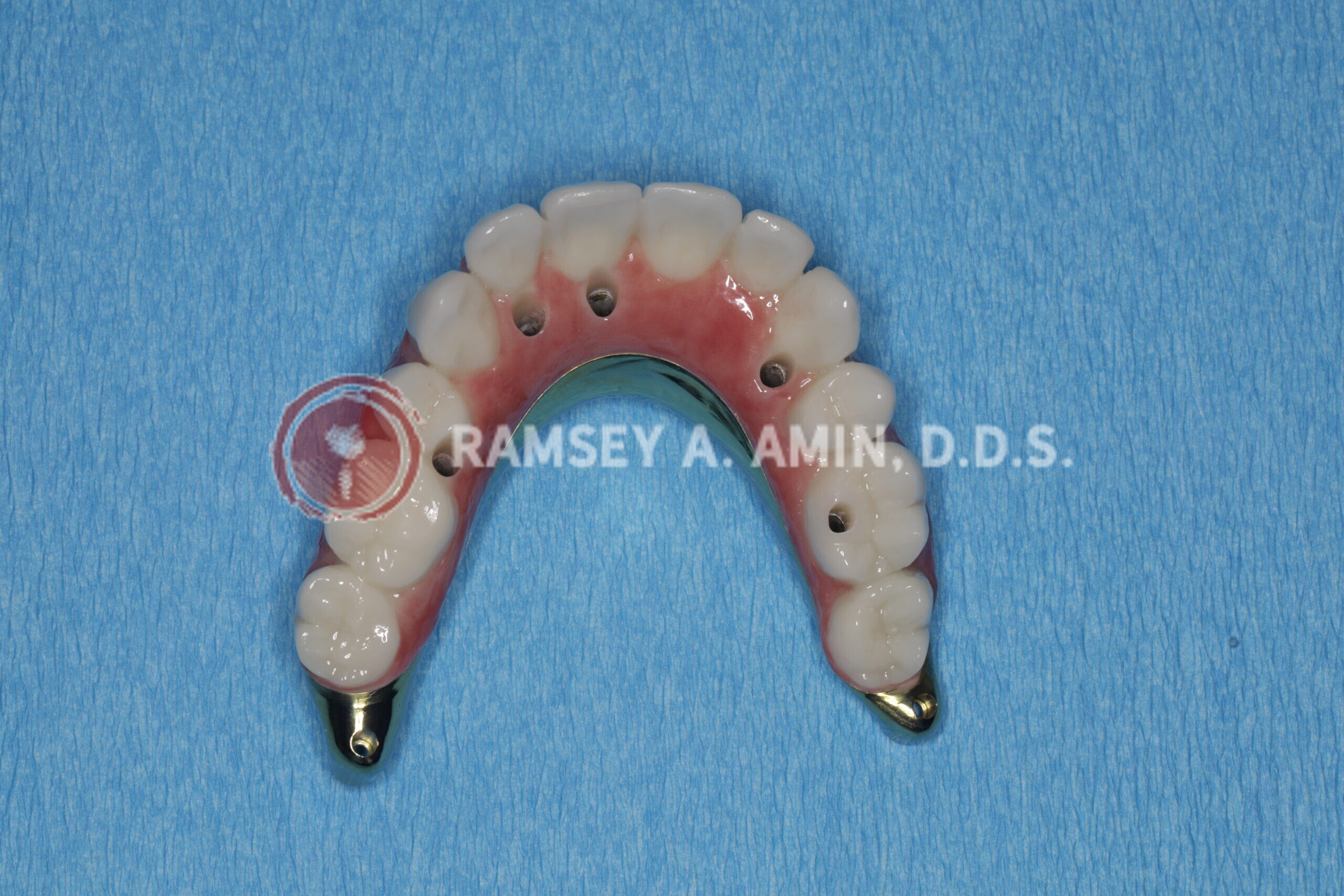
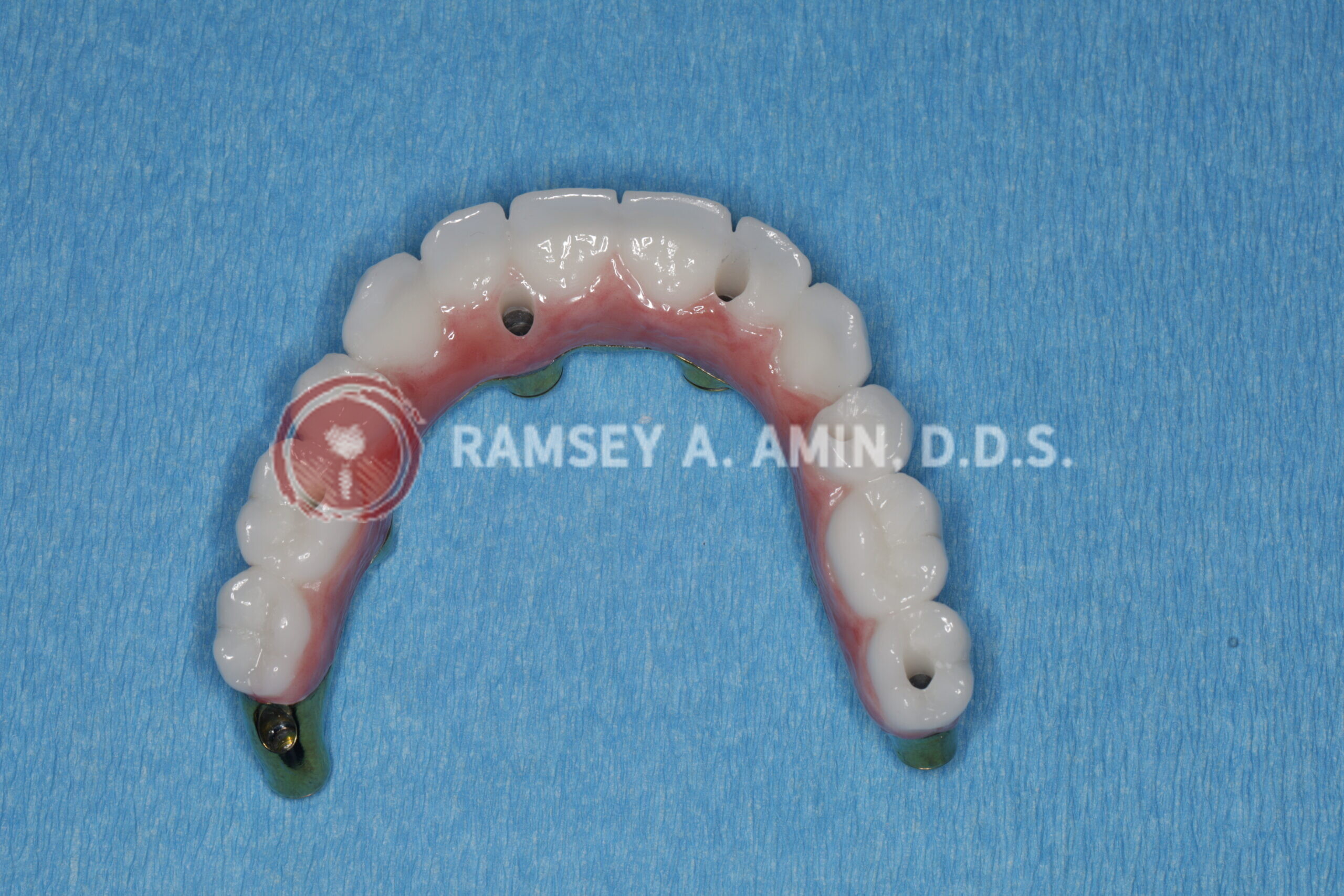
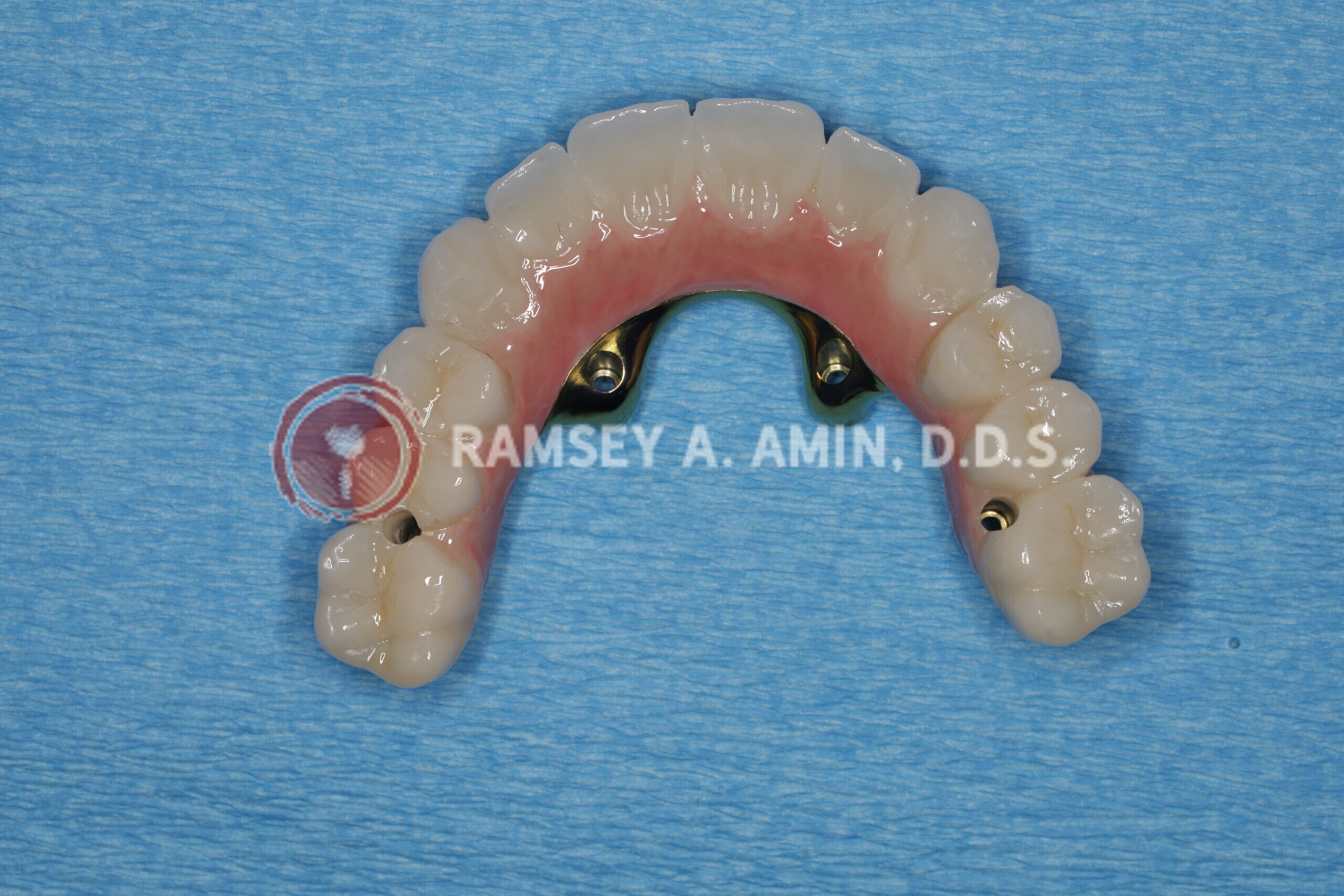
Titanium can be polished to a very smooth, nonporous surface. When properly designed and polished, it is very tissue-friendly. In many titanium-bar cases, much of the underside of the bridge is metal rather than zirconia.
This creates a smooth surface against the gums that can be more favorable for soft-tissue contact and easier to keep clean.
Of course, the design still needs to allow you to clean underneath your full-arch bridge. I spend a lot of time discussing that with patients because successful All-on-4 treatment is not just about placing implants and delivering a beautiful smile. You need a bridge that can be maintained for years.
When a Large Upper Arch Needs Extra Support
Titanium bars can also be extremely helpful in more complex upper-jaw cases. It cannot always be predicted when it will be needed until the final stages.
For example, some patients need implants placed farther back in the upper jaw, including pterygoid implants. These implants can be valuable when a patient has significant bone loss in the posterior maxilla and wants to avoid sinus grafting or other extensive bone-grafting procedures.
However, a full-arch bridge supported by pterygoid implants can be very large. In some cases, the zirconia bridge design is simply too large or thin to mill as one solid piece from a standard zirconia disc.
Most zirconia is milled from a puck or disc. If the full restoration exceeds the physical size of that disc, it cannot be fabricated as one monolithic zirconia bridge.
A titanium bar allows us to solve that problem intelligently. The titanium framework can be milled to span the full arch, while the zirconia portion can be fabricated in a smaller, more manageable segment and attached to the bar.
This is one reason advanced full-mouth dental implant treatment isn’t a one-size-fits-all procedure. Every jaw, bite, implant position, and restoration design needs to be considered together.
People who want the thinnest teeth often need a bar.
Are There Downsides to a Titanium Bar?
There can be. A titanium-bar restoration is more complex than a straightforward monolithic zirconia bridge, and complexity comes with trade-offs.
Here are some of the potential disadvantages:
- The zirconia is attached to the titanium framework, so there is a possibility—although uncommon—that the zirconia could uncement or separate from the bar over time.
- Some titanium-bar designs can limit the type or position of screw access channels that can be used.
- Angled screw channels may be more difficult to incorporate in certain designs.
- The laboratory work is more involved.
- The fabrication requires more time, planning, and precision.
- The treatment can be more expensive than a simpler all-zirconia bridge.
- The metal may show if it cannot be fully hidden (will look metal or gold color)
- The bridge can still chip or break.
That said, the goal is not to choose the least expensive design. The goal is to choose the design that is most appropriate for your anatomy, bite, implant position, and long-term needs.
A bridge that is not adequately supported may be less expensive at the beginning but can create bigger problems later.
Precision Matters in Full-Mouth Implants
A titanium-bar All-on-4 bridge is not something that should be improvised during treatment.
These are highly precise, custom-made medical devices. The implant positions, digital scans, bite relationship, tooth position, lip support, smile line, jaw movement, and cleaning access all need to be planned carefully. Then the laboratory needs to manufacture the titanium framework and zirconia restoration with exceptional accuracy.
The quality of the dental laboratory matters. So does the experience of the surgeon, restorative dentist, and clinical team coordinating the case.
Full-mouth dental implants are a major investment in your health, confidence, and quality of life. The final bridge should not just look good in photos. It needs to fit accurately, function comfortably, support your bite, protect the implants, and be designed for long-term maintenance.
The Bottom Line
A titanium bar is not required for every All-on-4 dental implant bridge. But in the right situation, it can add important strength, improve support in cantilever areas, provide a smooth tissue-friendly underside, and make complex full-arch designs possible.
For the right patient, it can be the difference between simply making a bridge fit and designing a restoration that is built to last.
If you are considering full-mouth dental implants in Burbank or Southern California, the important question is not, “Do I need a titanium bar?” The better question is: What bridge design gives me the best combination of strength, cleanability, appearance, comfort, and long-term reliability?
That answer should come from careful planning—not a cookie-cutter approach.