
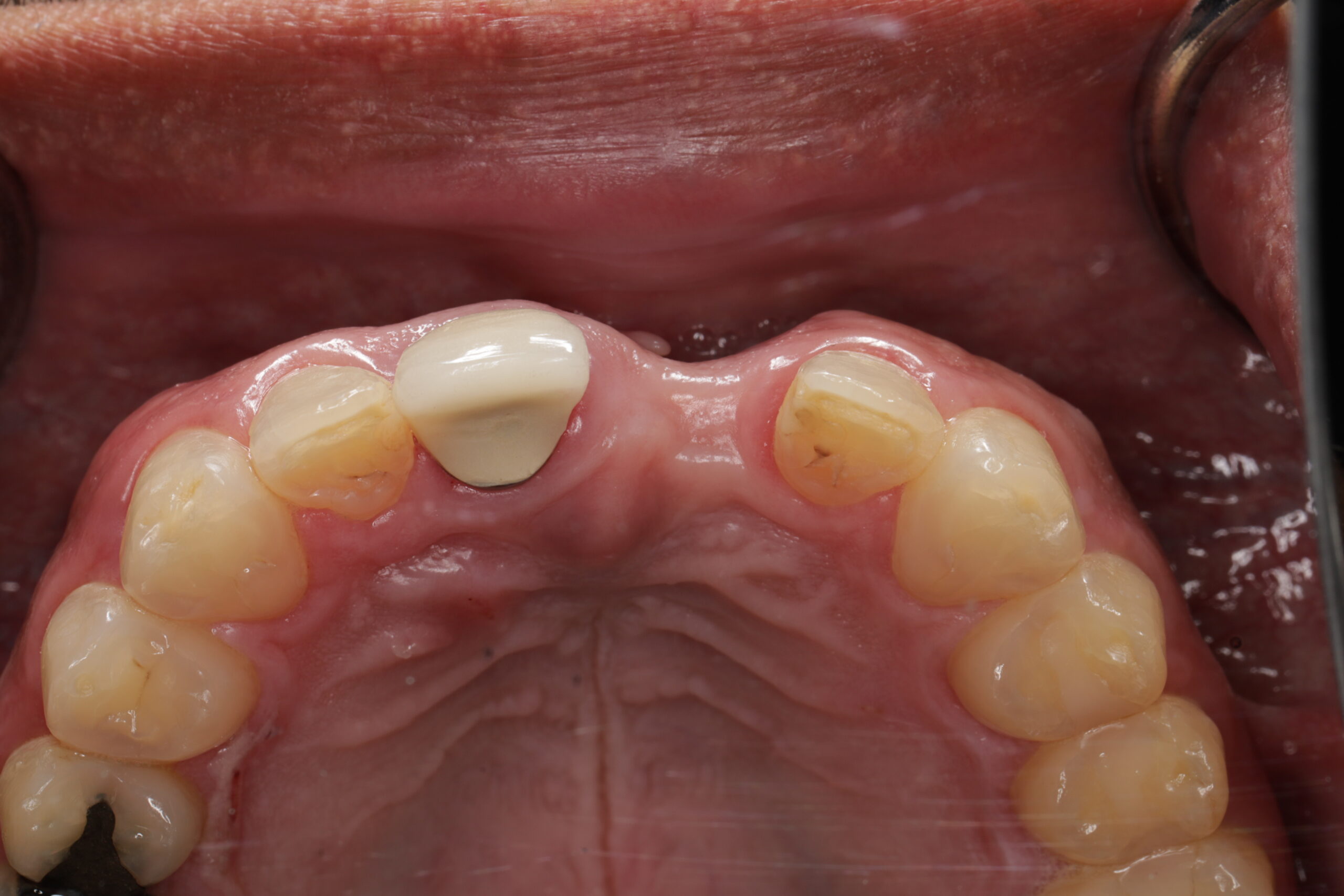
When I talk about dental implants, most people focus on the implant and the tooth itself. But the truth is, the foundation—the bone—is everything. Without enough healthy, solid bone to hold the implant, the results can fail before we even begin. That’s where bone grafting comes in.
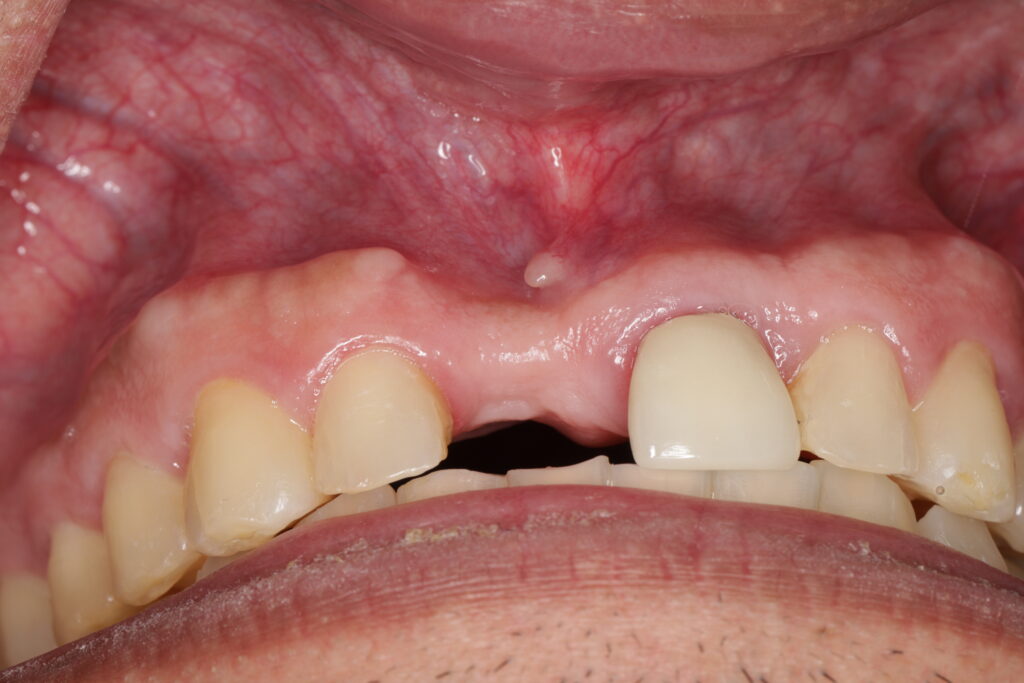
What is an Autogenous Bone Graft?
For the last 26 years, I’ve been using patients’ own bone—called an autogenous bone graft—to rebuild critical areas before placing dental implants. “Autogenous” simply means it comes from your own body. Think of it like taking a small chip of bone from one part of your jaw and carefully transplanting it to another spot where it’s needed most.
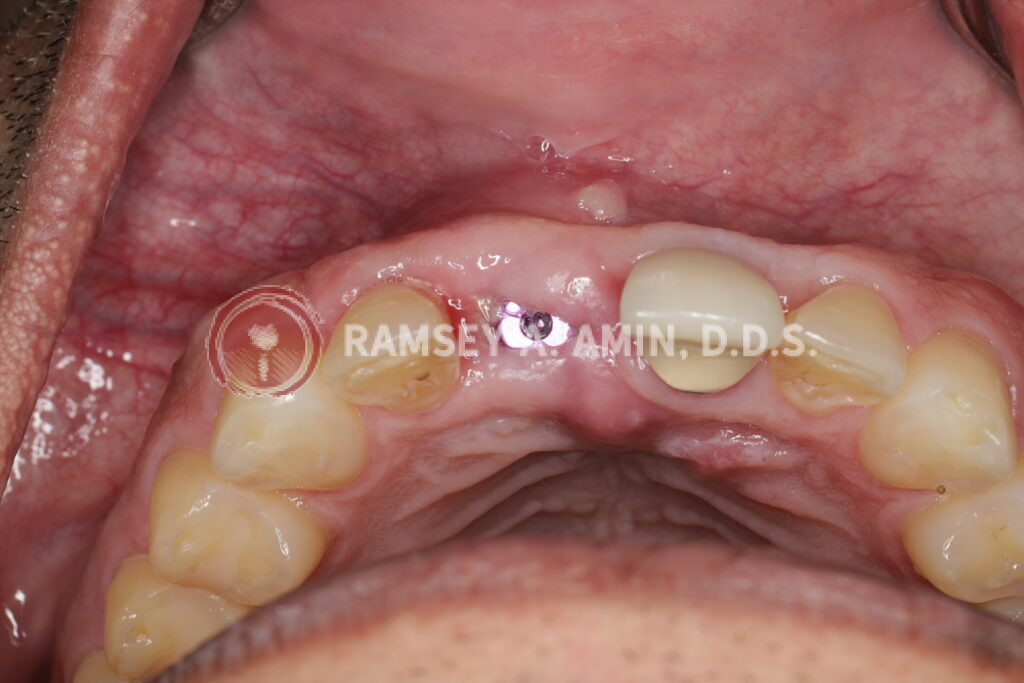
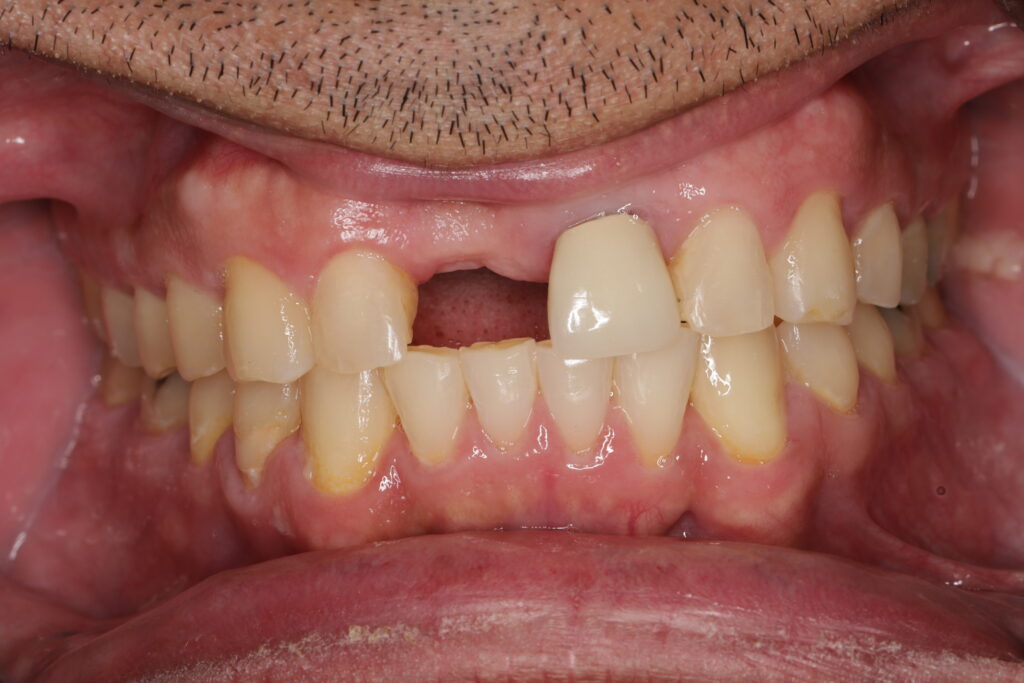
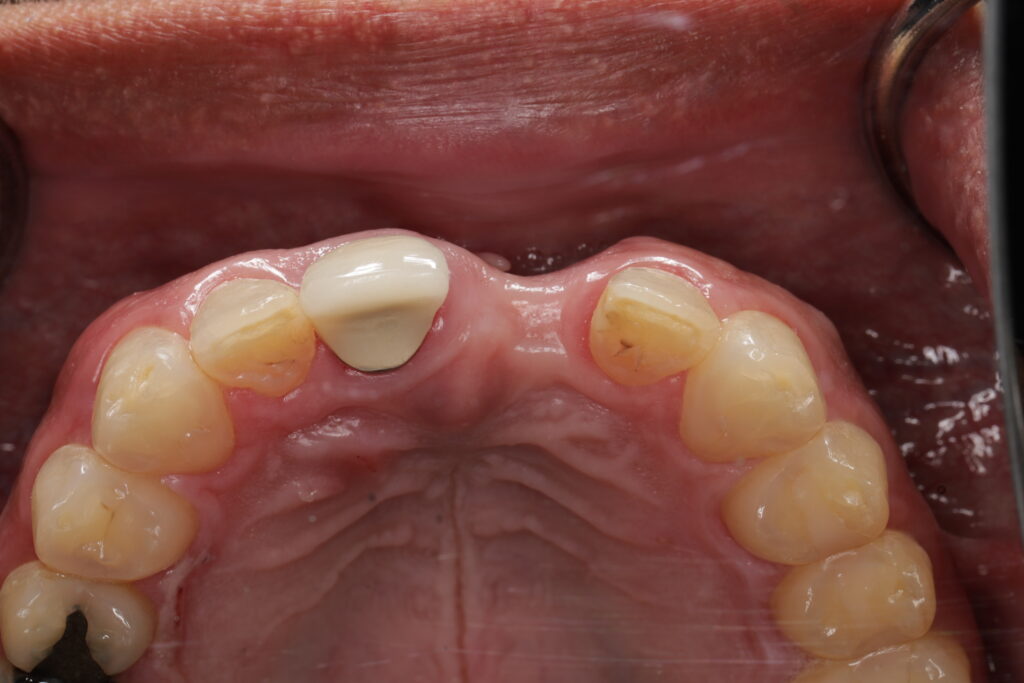
This approach is particularly important in the upper front teeth—a highly visible area where the bone is naturally very thin. When a tooth in that region is lost, the bone can dissolve rapidly. Over time, this creates a dent or collapse in the jawbone. If the bone is too narrow, we can’t place the implant in the correct alignment, and the final result won’t look natural.
That’s where the block bone graft comes in. It’s not just “filling in” bone with particles. Instead, we’re actually building a new wall where none exists, giving your implant a proper structural foundation.
How the Bone Graft Procedure Works
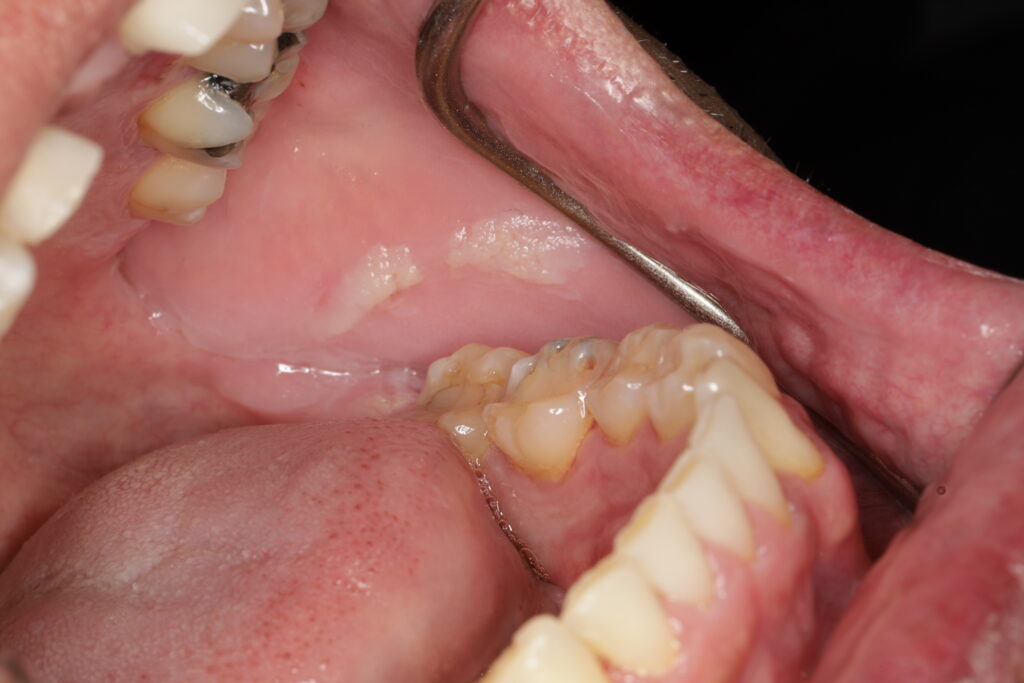
Most of the time, I take the graft from the ramus area of the lower jaw (near where the wisdom teeth used to be). This area provides an excellent source of dense bone. While you’re comfortably sedated with IV anesthesia, I make a small incision. I then remove a carefully measured piece of bone. Next, I shape it as needed.
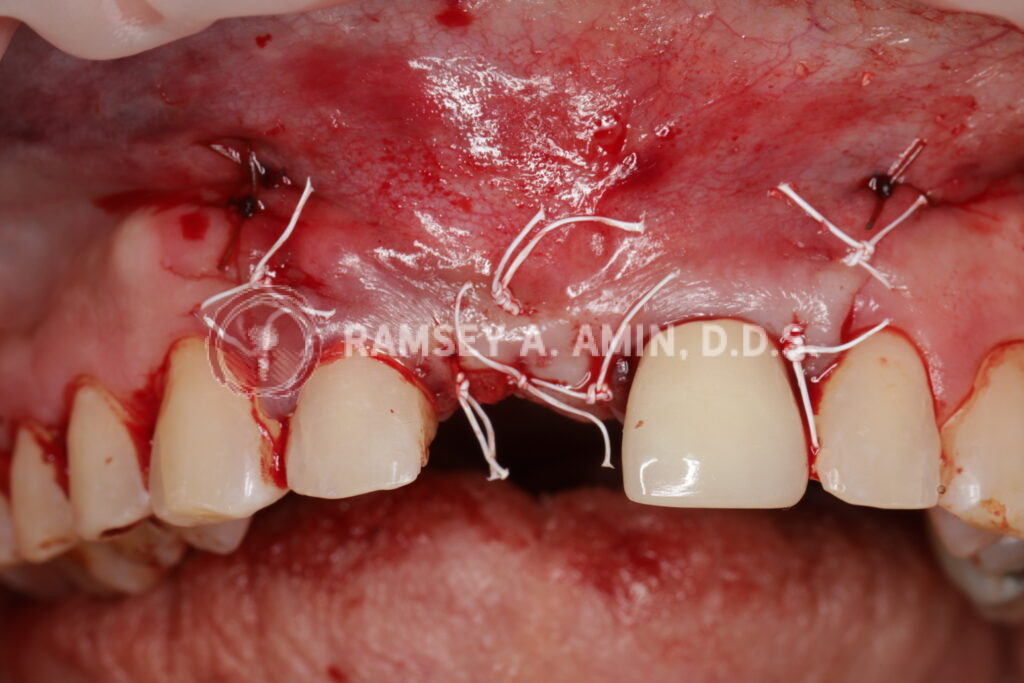
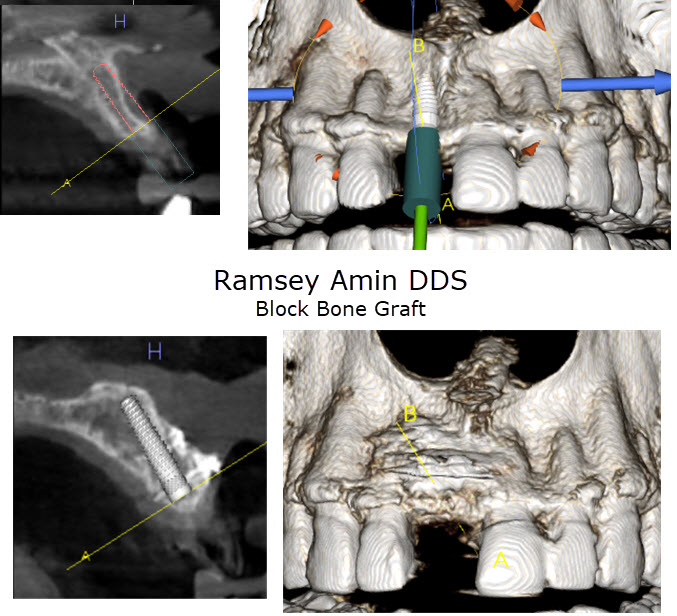
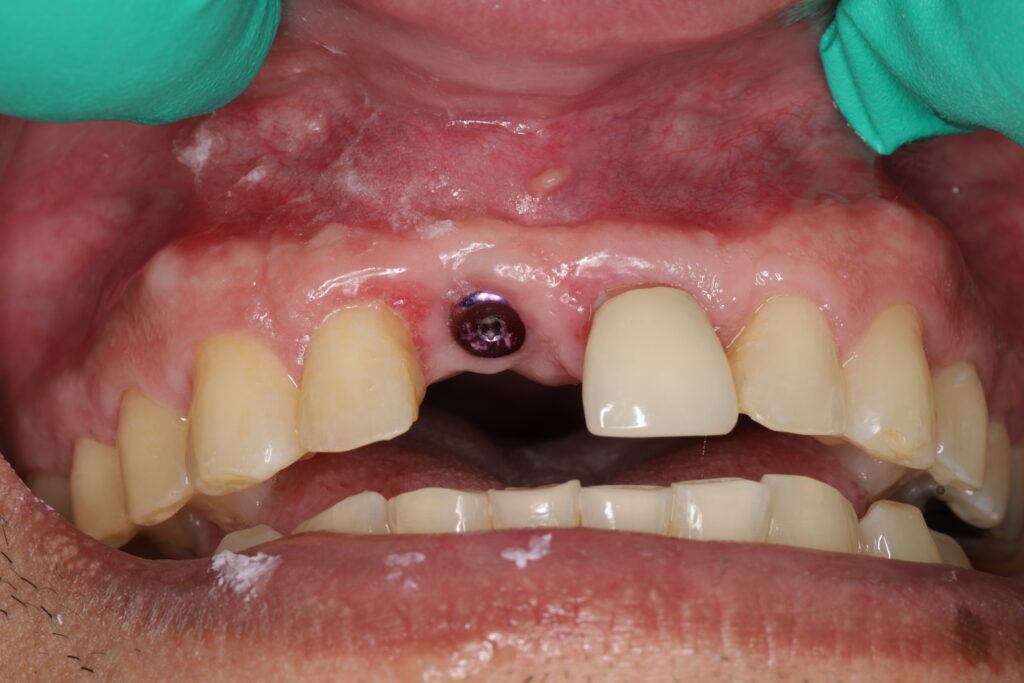
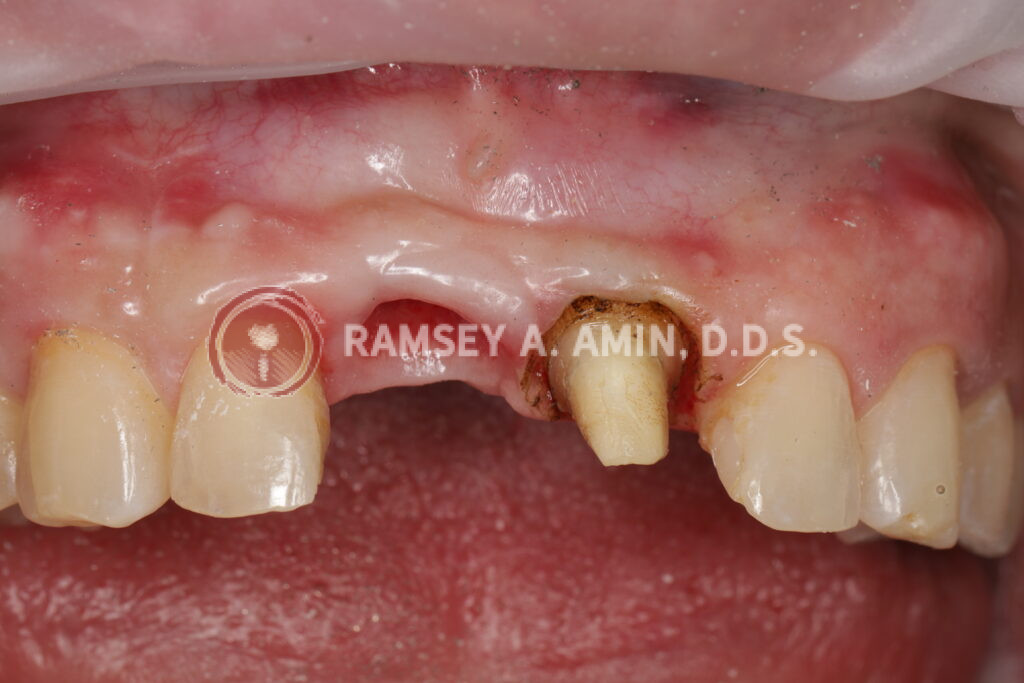
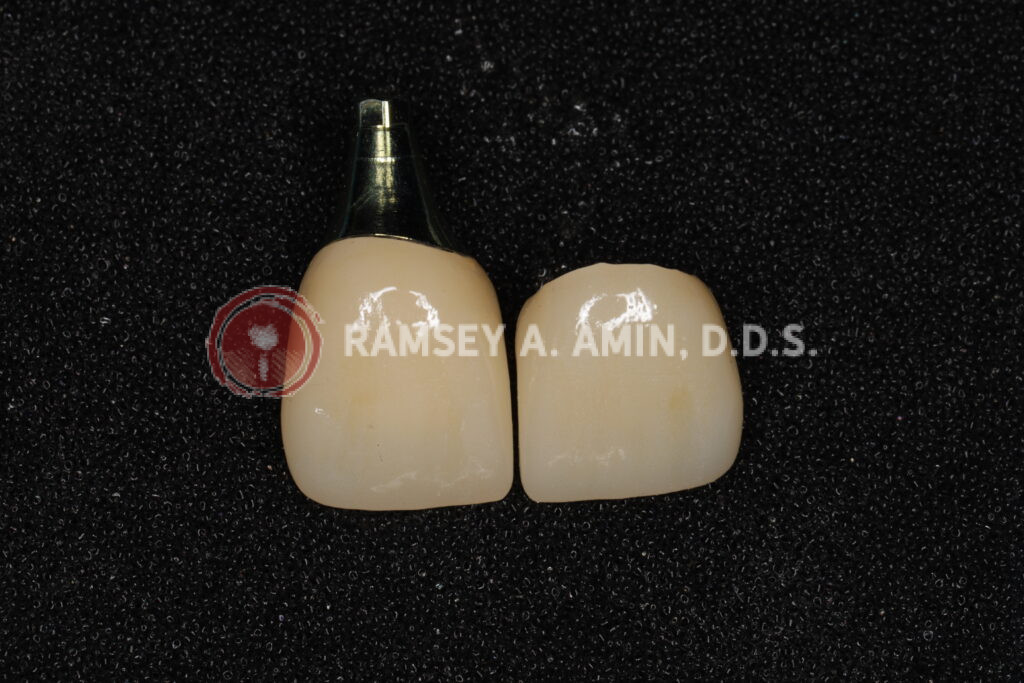
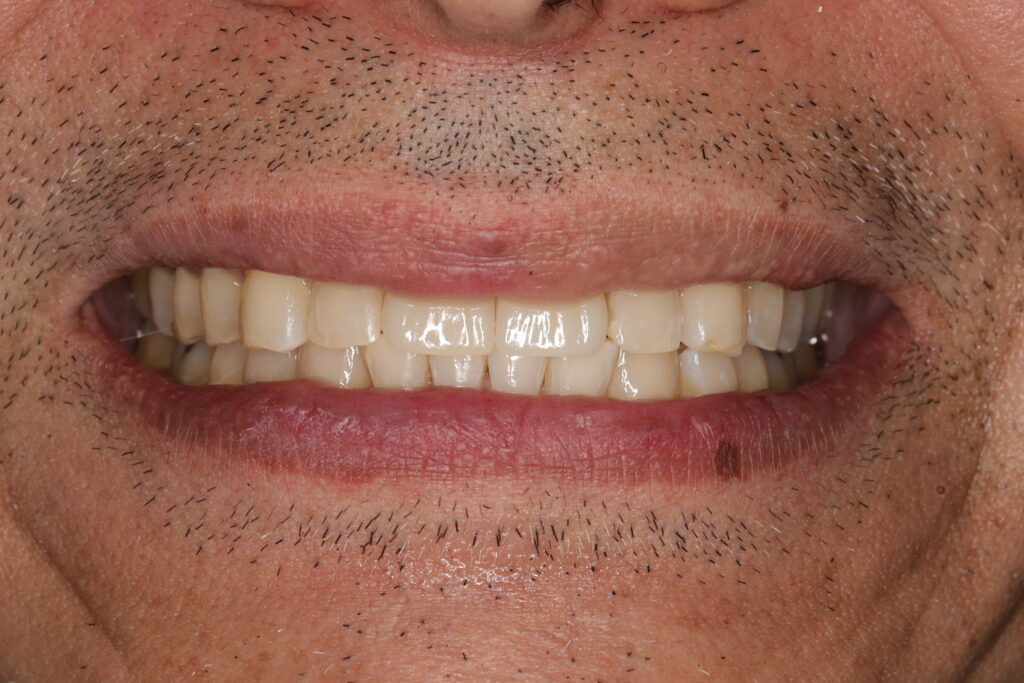
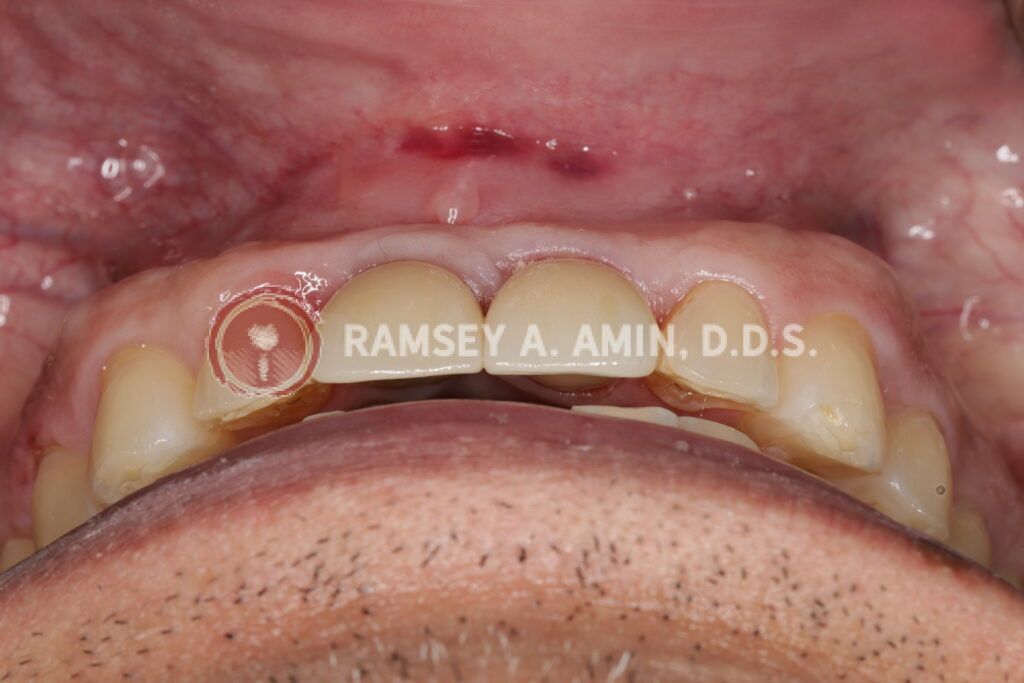
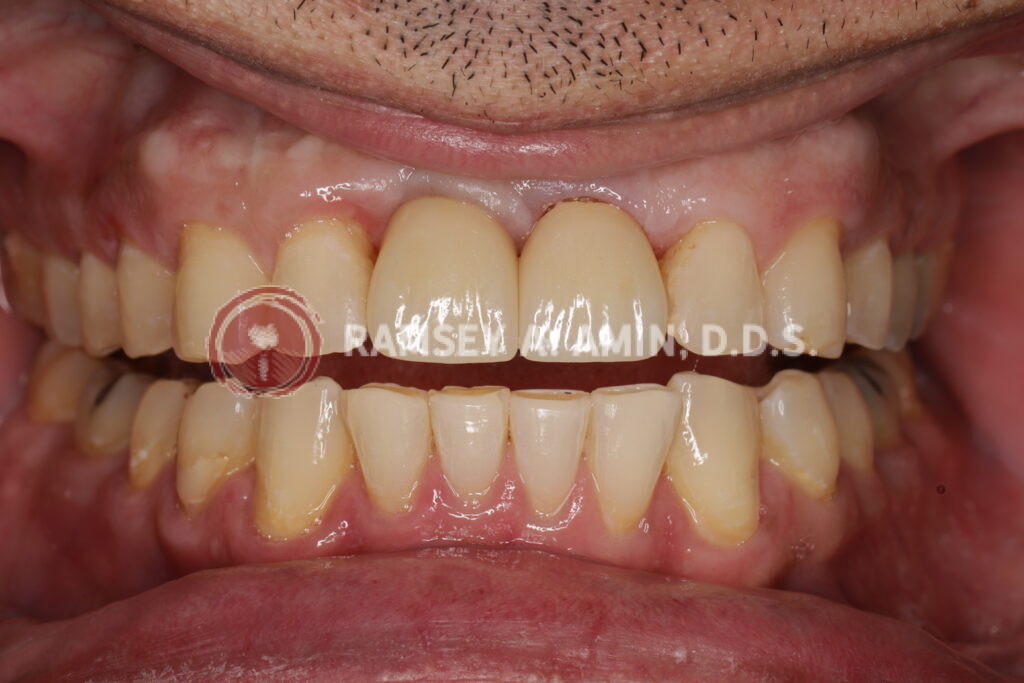
What to Expect During the Block Bone Graft Procedure
Here’s what happens step by step:
- Donor bone harvested – From the lower jaw (the ramus/external oblique ridge).
- Bone split into wafers or chips – These are secured with screws into the deficient area (upper front jaw, most often).
- Bone plate fixed into place – Restores the natural contour of your jaw.
- Stimulation of healing – I make tiny “perforations” in your existing bone (like aerating soil in a garden) to encourage blood supply.
- PRF (Platelet-Rich Fibrin) added – Drawn directly from your own IV blood, PRF supercharges healing.
- Bone shavings packed in – Your own bone chips fill the gaps for seamless integration.
- Site carefully closed with sutures – Both the donor and the recipient areas are managed like two separate surgeries.
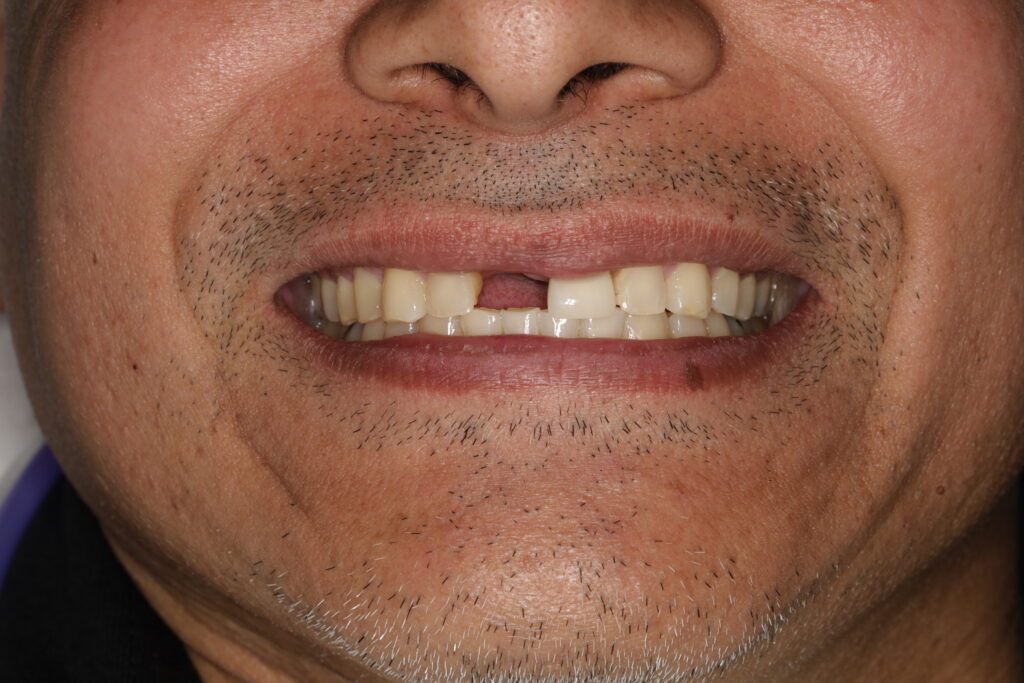
The result? That “dent” in the bone disappears, and the foundation is strong enough for a stable implant.
The Healing Process
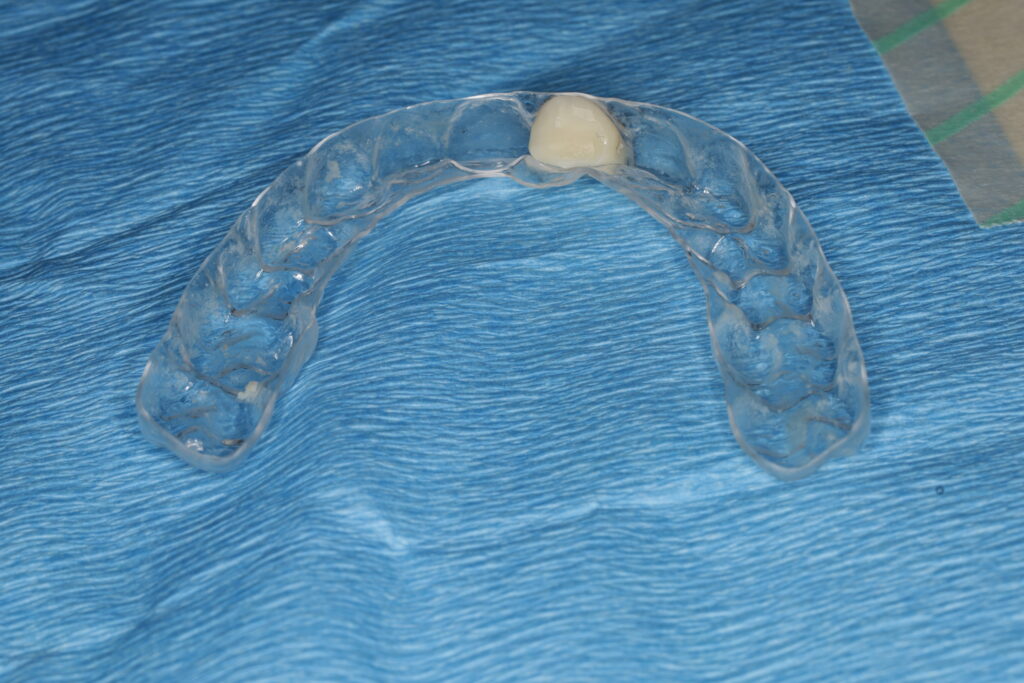
This isn’t a quick-fix procedure. Healing typically takes 4–5 months, sometimes a bit longer if vertical bone augmentation is needed. During this time, no stay-plate dentures can be worn, because pressure on the gums could damage the graft. Instead, patients use an Essex retainer (a clear retainer with a tooth) or sometimes no temporary at all. This small compromise is worth it for long-term success.
Pain management is important. Most of my patients receive Exparel, a long-lasting local anesthetic injection that helps control discomfort for days after surgery. We also use IV sedation, steroids, and antibiotics to make sure recovery is smooth and comfortable.
In some cases, patients also need a gum graft—either at the same time or later on—especially if the gum has thinned over years of bone loss.
Long-Term Success of Block Bone Grafts
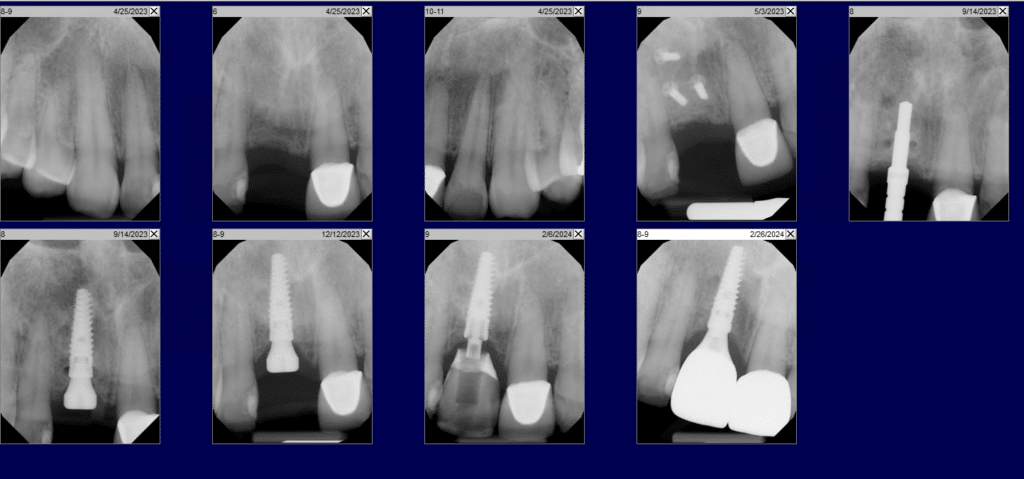
The sequence usually looks like this:
- Block bone graft placed.
- Four months later, implant placed (without a tooth on it yet).
- Temporary tooth used to shape the gums.
- Final crown placed, matched perfectly to surrounding teeth.
Block bone grafts using your own bone are highly predictable and extremely successful in my experience. They are, however, technique-sensitive procedures. Not every dentist performs them, and they require advanced surgical training and experience.
There are alternatives, such as GBR (guided bone regeneration), where bone from another person or a donor source is used with membranes to grow new bone. In certain cases, that can work. But in critical areas like the upper front teeth, I’ve found nothing compares to autogenous bone—it’s yours, it integrates beautifully, and it lasts.
Over time, we’ve refined the technique, using thinner, more precisely shaped bone grafts. This has improved long-term stability and has allowed us to restore natural appearance and function in even very challenging cases.
When you look at the before-and-after X-rays, the difference is dramatic. What started as a collapsed, narrow ridge of bone becomes a stable, full foundation ready for an implant—and ultimately, a natural-looking smile.
Ready for an Appointment?
If you’ve lost an upper front tooth and your bone has collapsed, don’t lose hope. With the right surgical techniques, we can rebuild what’s been lost. Using your own bone for a critical bone graft gives you the best chance of long-term implant success—and the most natural-looking results.
This is not a “cookie-cutter” procedure. It takes planning, skill, and experience, but done right, it works—and it works beautifully.
I have had dentures for 30 plus years, which has caused extreme bone loss in my upper jaw and my lower jaw has ultimately no bone. I have been struggling to find anyone who can help me. The dentist I saw today showed me your work on Subperiosteal implants and recommended I try reaching out to you. I am in desperate need of help. Although I am a little more mature than some, I still have plenty of years to engage in eating. Please would you be kind enough to personally reach out to me? I would love to discuss this further with you. Thank you for taking the time to read this.
Hi Noreen –
I am certain that my staff reached out to you. Are you coming to see us?